What is enameled coil wire?
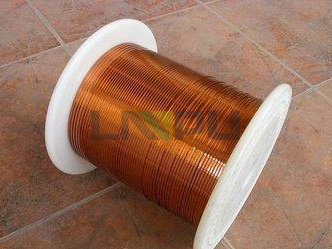
Enamel coil wire is a special wire with high purity copper and aluminium as conductor, coated with insulating varnish to form a dense insulating film, the core role is to achieve current conduction in tightly wound coils, and at the same time to avoid short-circuiting between the turns, to ensure the high efficiency and stability of electromagnetic conversion. As the core component of electromagnetic equipment, it has excellent insulation, high thermal conductivity, good mechanical ductility, can be adapted to high-speed winding, high-temperature operation, high-voltage loads and other harsh conditions, is the transformer, new energy automotive motors, industrial servo motors, high-frequency inductors, and other equipment indispensable to the key materials.
From a structural point of view, Enamel coil wire consists of two core parts: the conductor determines the conductive efficiency and mechanical strength, and the insulating varnish layer ensures pressure resistance, heat resistance and environmental corrosion resistance. The performance of the two match, directly affecting the overall performance of the wire. At present, the mainstream industry to oxygen-free copper conductor-based, its conductivity of more than 99.9%, energy loss is very low; aluminium conductor by virtue of lightweight, low-cost advantage, used in large transformers, low-voltage motors and other scenes.
Electrical Insulation Requirements
Electrical insulation is the core function of enamelled coiled wire, and its core role is to isolate adjacent wires in the coil, prevent turn-to-turn and layer-to-layer short circuits, and avoid safety accidents such as equipment burnout and power leakage. Insulation performance is directly determined by the material, thickness and uniformity of the paint layer, which needs to be accurately matched with the working voltage, temperature rise and environmental conditions of the equipment.
The core indexes of insulation performance mainly include three items, namely breakdown voltage, insulation resistance and pinhole rate. Among them, the breakdown voltage is the critical value of the insulation layer by the voltage breakdown, the industry general requirements for the working voltage of the equipment 3-5 times, high-voltage scenes need to reserve a larger margin to protect the safety; insulation resistance is used to measure the degree of leakage of the paint layer, especially at high temperatures, high humidity environment needs to be kept stable, to avoid equipment failure due to insulation failure; pinhole rate refers to the number of tiny holes in the layer of paint, pinhole is too easy to trigger partial discharge, Too many pinholes can easily cause partial discharge and short-circuit problems. High-end application scenarios usually require that the number of pinholes per metre should be ≤3.
Selection and matching needs to be combined with the precise positioning of the equipment working conditions, different scenarios correspond to different insulation selection logic. Low-voltage small power equipment such as small household electrical motors, ordinary inductors, can choose 1 level of thin insulation, in order to protect the basic insulation requirements while taking into account the heat dissipation and cost control; high-voltage high-power equipment such as industrial transformers, new energy motors, need to choose 3 level of thick insulation, in order to enhance the voltage resistance, to eliminate the potential risk of short-circuit; high-frequency conditions such as switching power supply transformer, should give priority to the selection of low dielectric loss insulation materials, to effectively reduce the energy loss under high frequency operation, to effectively reduce the energy loss, short-circuit problems in different scenarios. The insulation material should be used with low dielectric loss to effectively reduce the energy loss under high frequency operation and ensure the efficient and stable operation of the equipment.
Wire diameter and gauge
Wire diameter (wire gauge) is the basic parameters of selection, directly determines the current-carrying capacity of the wire , DC resistance, winding density, need to be combined with the power of the equipment, winding space, heat dissipation conditions are determined. Industry common AWG (U.S. standard), SWG (British standard), millimetre system three labeling methods, the core logic is: the thicker the wire diameter, the greater the current-carrying resistance, the lower the resistance, but the greater the occupation of space; the finer the wire diameter, the winding is more tightly packed, suitable for small space, but current-carrying capacity is limited.
Core influence of wire diameter
Wire diameter has a direct impact on the current-carrying capacity, resistance loss and space adaptation, in which the coarse wire diameter (low AWG value) is suitable for industrial motors, automotive starter motors and other high-current scenarios, which can effectively reduce the heat; fine wire diameter (high AWG value) is suitable for micro-motors, precision inductors and other small-current, high-rotation scenarios, and in the new energy automotive motors, miniature sensors, and other space-constrained scenarios, preferred choice. In space-constrained scenarios such as new energy vehicle motors and miniature sensors, the preferred choice is fine wire diameter for tight winding to improve space utilisation, while noting that for every 10% reduction in wire diameter, the DC resistance will increase by about 20%, and the copper loss (I²R) will rise significantly, leading to the equipment temperature rise exceeding the standard.
Recommendations
Different working conditions correspond to different wire diameter selection standards, high current conditions (≥ 10A) need to choose wire diameter ≥ 0.8mm wire to protect the current-carrying capacity and heat dissipation effect, small and medium current conditions (1-10A) can choose 0.3-0.8mm wire diameter to balance performance and cost, while medical sensors, earphone coils, and other micro-precision equipment is suitable for the selection of wire diameter ≤ 0.3mm wire, in order to match the demand for fine winding. The wire diameter is ≤0.3mm for micro-precision devices such as medical sensors and earphone coils to meet the demand of fine winding.
Thermal Class Rating and Heat Resistance
Enamelled wire‘s main performance requirement in terms of performance class is heat-resistance grade, or the upper limit of the working temperature of the wire. This temperature reigns over the overload capacity and the working life of the equipment.
Classification Table (NEMA Standards)
| Grade |
Max. Operating Temp. |
Insulation Material |
Primary Applications |
| Class B |
130°C |
Polyester |
Household appliance motors, small transformers. |
| Class F |
155°C |
Modified Polyester |
Industrial fans, general-purpose inverters. |
| Class H |
180°C |
Polyester-imide |
EV motors, photovoltaic (PV) inverters. |
| Class R |
220°C |
Polyamide-imide |
Heavy-duty traction motors, high-temp industrial gear. |
| Class S |
240°C |
Polyimide |
Aerospace, military-grade special equipment. |
Key Selection Principles
To assure longterm life and safe operation, selection shall adhere to the three main principles:
The Safety MarginRule: In order that unit life time of the wire is not limited by an equipment failure, the equipment maximum Temp shall be at least 20 through below the wire rated grade:
Max Equipment Temp ≤ Wire Heat Grade – 20℃
Load & Dissipation Compensation: in the case of cyclical heavy loads or poor heat dissipation condition (like sealed motor), the wire grade should be 1~ 2 more correspondingly than so called general calculation value.
Thermal Shock Resistance: in the condition of side by side ups and downs of temperature (like outdoor appliance), the insulation material has better thermal shock characteristic shall be taken as first choice, to avoid insulation layer brick away because of repetitive thermal expansion and contraction.
Insulation Type and Coating Material / Durability
Insulation coating is the core protective layer of the Enamel coil wire, and different materials have significant differences in heat resistance, chemical resistance, and mechanical properties, which directly determines the applicable scenarios of the wire. The industry’s mainstream insulation materials and their characteristics are as follows:
Polyurethane (PU) is one of the most widely used insulating materials for Enamel coil wires. Its core advantage lies in its excellent direct weldability, which allows it to be welded directly without the need for paint stripping, and significantly improves the efficiency of the wire winding process, while it has a good flexibility, making it very suitable for fine winding processes. However, it also has obvious limitations, the heat resistance level is low, only up to 130 ℃, and chemical resistance is general, so it is mainly used in consumer electronics, micro-motors, precision coils, audio equipment, and other heat and chemical resistance requirements of the scene is not high.
Polyester (PE) insulation material with balanced performance to become the first choice for cost-effective, heat-resistant level of up to 155 ℃, and has good resistance to solvents, oil resistance, can be adapted to most of the conventional working conditions, and the cost of moderate, will not bring too much pressure on the production budget. Based on these characteristics, polyester (PE) is widely used in general industrial motors, transformers, low-voltage appliances and other scenarios, not only to meet the basic insulation needs, but also to achieve a balance between cost and performance.
Polyesterimide (PEI) insulation material balances heat resistance and mechanical properties, with a heat-resistant rating of up to 180°C, far exceeding that of polyurethane and polyester, as well as high mechanical strength, outstanding resistance to scratching and aging, and the ability to withstand the mechanical stresses and environmental losses of long-term operation. This material is very suitable for new energy vehicle motors, servo motors, high-frequency equipment and other heat resistance and mechanical properties of the dual requirements of the scene, can effectively protect the long-term stable operation of the equipment.
Polyamideimide (PAI) is a high-performance insulating material, heat-resistant grade up to 220 ℃, and has excellent chemical resistance, vibration resistance and refrigerant resistance, can withstand the erosion of complex and harsh environments. Its application scenarios are mostly harsh working conditions, such as automotive engine compartments, refrigeration equipment, chemical scenarios, special motors, etc., which can maintain stable insulation performance and mechanical reliability in extreme environments.
Polyimide (PI) is the preferred insulation material for high-end special scenarios, with a heat-resistant grade of up to 240°C or more, excellent resistance to high and low temperatures, radiation resistance, and extremely stable electrical performance, which can be adapted to the needs of extreme environments, such as aerospace, military, and high-temperature special working conditions. Despite its high cost, its excellent comprehensive performance can fully guarantee the safe and stable operation of the equipment in the high-end scenarios with extreme requirements for reliability and performance, and it is the core choice for high-end scenarios.
Electrical Performance Requirements
Enamel coil wires are subject to mechanical stresses such as stretching, bending and vibration during winding, assembly and operation, and mechanical strength and flexibility directly determine the processing yield and long-term reliability.
Core Mechanical Performance Indicators
Scratch resistance and flexibility are important parts of the core mechanical property index of Enamel coil wire. Among them, scratch resistance refers to the ability of the paint layer to resist scratch damage, in high-speed winding, flat wire and other processing technology, must choose a high scratch-resistant material, so as to effectively avoid the process of winding the paint layer off, to ensure that the insulating properties of the wire is not damaged; flexibility needs to be verified through the winding test, for fine wire diameter, complex winding and other scenarios, the wire needs to have a good flexibility, so as to prevent bending and breakage during the winding process. Winding process to prevent breakage, to ensure smooth processing.
Elongation and springback also affect the processing yield and reliability of Enamel coil wires. Elongation is the ability of the guide body not to break easily when stretching, according to the national standard requirements, its value should be ≥10%, this index can effectively guarantee that the wire will not be broken during the winding process due to stretching; resilience is the ability of the wire to maintain its shape after winding, for the precision coils and other scenarios that have requirements for the accuracy of the shape, a good resilience can help the coil to set the shape to ensure that the equipment operates in a stable and accurate manner.
Working condition matching logic
In view of the working conditions of high-speed automatic winding equipment, the selection of Enamel coil wires with high scratch resistance and high flexibility should be given priority. This type of wire can effectively resist the scratching force generated during high-speed winding to avoid the paint layer from falling off, while good flexibility can reduce the phenomenon of broken wires during the winding process, significantly improve the processing yield and production efficiency, and adapt to the high efficiency of the automated production line operation requirements.
In vibration conditions, such as automotive, rail transit and other scenarios, the need to use high mechanical strength, paint adhesion of the wire, this type of wire can withstand long-term vibration brought about by the mechanical stress, to prevent the paint layer due to vibration and lead to insulation failure, to protect the equipment for long-term stability of the operation; and for the Hairpin process, the wire needs to take into account the strength and ductility enough to withstand flattening of the processing of pressure, but also to adapt to the subsequent insertion of the wire, and the wire can be used for the production process. And can be adapted to the subsequent insertion process, to ensure that the moulded flat wire to meet the assembly requirements of the motor winding.
Electrical Performance Requirements
Voltage level and electrical conductivity is the core of the Enamel coil wire, directly affecting the energy efficiency of the equipment and operational safety. The core of the conductivity is reflected in the conductor material and DC resistance in two aspects, the conductor material to oxygen-free copper as the first choice, its conductivity of 100%, the lowest energy consumption, suitable for high-end scenes; aluminium conductor conductivity is only 60%, the need to increase the diameter of the wire to compensate for the lack of conductivity, suitable for low-cost, lightweight needs; silver conductor conductivity is the highest, up to 106%, is only used in aerospace and other special requirements for the ultimate performance of the scene; DC resistance is directly to meet the requirements of motor winding assembly. DC resistance is directly related to the equipment copper loss and energy efficiency, the lower the resistance, the higher the energy efficiency, high-frequency scenarios also need to consider the skin effect, the resistance value is corrected to ensure stable performance.
Voltage level selection needs to be accurately matched with different application scenarios, low-voltage scenarios (≤ 1kV) do not require high insulation, the choice of conventional insulation materials, focusing on both cost and heat dissipation needs; high-voltage scenarios (1-10kV) need to be targeted to improve the thickness of the insulation and breakdown voltage, to effectively prevent the coil interlayer breakdown, to ensure operational safety; ultra-high-voltage scenarios (≥ 10kV) need to use special high-voltage insulation materials, while strictly controlling the paint coating For ultra-high voltage (≥10kV), special high-voltage insulating materials should be used, and the uniformity of the paint layer should be strictly controlled to avoid potential safety hazards caused by uneven insulation and to ensure that the wires are suitable for ultra-high-voltage working conditions.
Corrosion Resistance and Environmental Factors
Outdoor, chemical, humidity, high temperature and other complex environments will accelerate the Enamel coil wire aging, environmental resistance is the key to its long-term reliable operation. For different environmental challenges, corresponding selection strategies should be adopted: under humid or high humidity environment, hydrolysis-resistant insulation materials should be selected to prevent the paint layer from absorbing water and failing, which is also an essential requirement for outdoor equipment and charging pile selection; in the face of chemical corrosion, such as oil, acid and alkali, and refrigerant, chemical-resistant materials, such as PAI, PI, etc., need to be selected, which is suitable for refrigeration equipment, chemical motors and other scenarios; for high and low-temperature cycling (-40℃~150℃) conditions, heat-resistant materials should be selected. ) working conditions, we need to choose thermal shock-resistant materials, to avoid cracking of the paint layer due to thermal expansion and contraction; salt spray environment, such as the ocean, coastal areas, need to choose the wire through the salt spray test, to prevent corrosion of the copper conductor, to meet the use of rail transport, marine equipment needs.
In order to facilitate the selection of personnel to quickly match the working conditions and wire, you can follow the simple and easy to remember the selection of mnemonic: wet selection of water-resistant, corrosion selection of chemical resistance, vibration selection of strong, high temperature selection of high temperature. This mnemonic accurately sums up the core selection logic under different complex environments, which can help practitioners quickly lock the appropriate Enamel coil wire, effectively avoid the environmental factors leading to wire aging, failure, and ensure the long-term stable operation of equipment.
Cost-effectiveness and Availability
Under the premise of meeting the core performance requirements of Enamel coil wires, cost control and supply chain stability are important considerations in the industrial selection process. Cost optimization needs to follow the scientific logic, from the conductor, insulation material and standardization of specifications in three dimensions, conductor, copper cost is higher than aluminium, in the large size, low-pressure scenarios can be used in aluminium to effectively reduce the cost; insulation material, the regular PE, PU material cost-effective and outstanding, suitable for most of the conventional conditions, while the high-end PI, PAI material is more costly, and is only suitable for high temperature, corrosion and other harsh conditions. In terms of specifications, the selection of common wire gauge and conventional heat-resistant grade can significantly reduce the procurement and inventory costs, and achieve a balance between cost and performance.
Supply chain control is also critical, directly affecting the stability of the selection and subsequent production security. Selection should give priority to manufacturers with ISO9001, UL, IEC and other authoritative certification to ensure stable and reliable quality of the wire; for ultra-fine diameter, flat wire, special insulation and other special specifications, need to assess in advance the manufacturer’s ability to customise and delivery to avoid affecting the production schedule; at the same time, bulk purchases must be carried out before the sample test, comprehensive verification of the performance of the wire and the processing process suitability, to avoid the source of quality This is to avoid quality risks at the source and ensure a smooth supply chain and efficient production.
Industry standards and certification
Enamel coil wires need to comply with international and domestic standards to ensure equipment compliance and safe operation.
Domestic standards: GB/T 6109 (enamelled round winding wire), GB/T 7095 (enamelled flat winding wire);
International standards: IEC 60317 (International Electrotechnical Commission), NEMA MW1000 (North America);
Core certifications: UL certification (North American market), VDE certification (EU market), CQC certification (domestic market).
Applications of Enamel Coil Wire
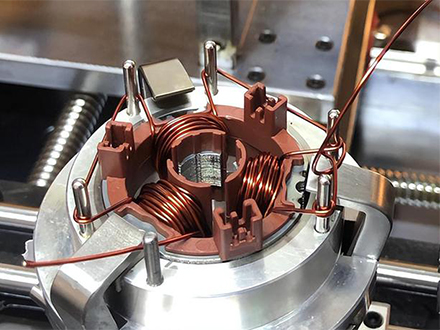
New energy vehicle drive motors on the Enamel coil wire performance requirements are extremely stringent, the core demand for high temperature resistance, vibration resistance, refrigerant resistance, high conductivity and high mechanical strength of the five major aspects of the need to adapt to the motor long-term high load operation and complex vehicle environment. Selection should give priority to the use of oxygen-free copper conductor with PAI / PI composite insulation, the use of H-class and above, heat-resistant grade, while the use of flat wire structure to enhance the use of winding space, to ensure scratch resistance ≥ 4N, so as to adapt to high-speed winding process and vehicle vibration conditions, to protect the drive motor efficient and stable operation.
Industrial servo motors emphasise high precision, high-frequency response, aging resistance and long-term stable operation, which requires high performance stability and processing precision of the wire. The Enamel coil wire suitable for this scenario should be made of PEI insulating material, with F or H class heat-resistant grade, and the tolerance of wire diameter should be strictly controlled at ≤±0.005mm, and at the same time, it has low dielectric loss characteristics, which not only meets the demand of high-frequency working conditions, but also guarantees the machining yield with excellent scratch-resistant performance, and meets the core demand for servo motor precision control.
Power transformers and inductors are mostly used in outdoor or complex power scenarios, the core demand is high voltage, low loss, moisture resistance and long life, need to effectively resist the erosion of the outdoor environment and ensure the efficiency of power transmission. Selection programme should adopt 3 thick insulation design, PE or PEI insulation material, with B or F class heat resistance level, while using large wire diameter wire suitable for high current transmission, hydrolysis-resistant insulation material to cope with the outdoor humid environment, to extend the service life of the equipment.
Consumer electronics and micro-devices such as medical sensors, headphones, etc. are compact and cost-sensitive, and the core requirements are fine wire diameter, high flexibility, direct solderability and low cost. Enamel coil wire suitable for such scenes should be selected PU insulation material, with fine wire diameter (0.05-0.3mm) oxygen-free copper conductor, its excellent straight welding can greatly simplify the processing procedures, good flexibility to match the needs of precision winding, while taking into account the cost control, to meet the needs of consumer electronics mass production.
Aerospace and special working conditions on the reliability of Enamel coil wires to reach the extreme, the core demand is high and low temperature resistance, radiation resistance and extreme reliability, need to adapt to the extremely harsh operating environment. Selection should give priority to the use of PI insulation materials, with S-class and above the level of heat resistance (240 ℃ or more), the use of high-purity oxygen-free copper conductor, and need to pass the harsh environmental testing to ensure that the wire in extreme temperatures, radiation and other operating conditions can still maintain stable performance, to protect the safe and reliable operation of special equipment.
Enamel coil wire selection five-step decision-making method
Enamel coil wire selection can follow the five-step decision-making method to ensure that the selection process is scientific, efficient and accurate, and to build a solid foundation for the production of equipment.
The first step is to define the working conditions of the demand, need to clarify the working voltage, current, temperature rise and other core electrical parameters of the equipment, while comprehensively sorting out the environmental conditions in which the equipment is located, including temperature, humidity, whether there is corrosion and vibration and other factors, this is the premise of the subsequent selection of all the selection of the premise of the work, only to accurately grasp the working conditions, in order to avoid the selection of the deviation.
The second step is to determine the core parameters, in clear working conditions on the basis of demand, targeted matching of Enamel coil wire heat-resistant grade, wire diameter, insulation material and mechanical properties, to ensure that the selection of the wire indexes are able to meet the electrical requirements of the equipment and the environmental needs of the adaptation to achieve the performance of the working conditions and the precise fit.
The third step is to adapt to the processing process, combined with the equipment production process of winding, welding, impregnation and other specific processes, select processing-friendly wire to reduce the processing of broken wires, welding and other problems, to improve production yields and efficiency.
The fourth step is the cost and supply chain assessment, under the premise of guaranteeing the core performance of the wire to meet the standard, a reasonable balance between performance and cost, to avoid excessive pursuit of high-end specifications resulting in cost waste, while giving priority to the selection of suppliers with authoritative certification, strong customisation capabilities and delivery guarantees, to ensure the stability of the supply chain.
The fifth step for the sample verification and testing, bulk purchases must be made before the wire breakdown voltage, heat resistance, scratch resistance, welding and other comprehensive testing, comprehensive verification of its performance and processing suitability, from the source to avoid quality risks, to ensure that the selection results are reliable and feasible.
Selection of common misconceptions and avoidance guide
Misunderstanding 1: Blindly pursuing high heat-resistant grade, increasing unnecessary costs; avoid the pit: according to the actual temperature rise of the equipment + 20 ℃ safety margin selection, do not overstep the level of procurement;
Misunderstanding 2: Neglecting the relationship between wire diameter and resistance, resulting in excessive heat generation; avoiding the pit: calculating the copper loss, to ensure that the wire diameter is suitable for current-carrying requirements;
Myth 3: Conductor light insulation, resulting in insulation failure short circuit; avoid pit: insulation and conductor performance is equally important, high-voltage scenarios focus on verifying the breakdown voltage;
Misunderstanding 4: Neglecting the process suitability, resulting in broken wires and poor welding; Avoiding the pit: combining the processing process to select the straight welding, scratch-resistant matching wire;
Misunderstanding 5: low-priced procurement of poor-quality wire, high failure rate in the late stage; avoid the pit: choose the manufacturers with complete certification and stable quality, do not sacrifice quality for cost.
Summarise
Enamel coil wire wire selection is a systematic balance of electrical performance, mechanical properties, environmental adaptability, process suitability, cost-effectiveness of the project, which directly determines the energy efficiency, life and safety of the equipment. From the core definition to the actual selection, we need to closely follow the needs of the working conditions, accurately match the heat resistance level, wire diameter, insulation material, mechanical strength and other key parameters, while following the industry standards, control the quality of the supply chain, in order to achieve the goal of ‘choosing the right one, using it well, and saving the cost’.
Whether it is new energy vehicles, industrial equipment, or consumer electronics, power equipment, enamelled coiled wire is an indispensable core basic material. With the development of the industry to high efficiency, miniaturisation and high temperature resistance, the performance requirements of the wire continue to improve, and the ability to accurately select has become the core competitiveness of engineers and procurement staff. This article provides a full range of selection logic and practical solutions to help practitioners quickly overcome selection problems, for equipment development and production to build a solid foundation.