Enameled copper wire, also known as electromagnetic wire, is the core winding wire of all kinds of electrical equipment, widely used in motors, transformers, home appliances, automotive electronics and other fields. It takes high-purity copper as the conductor, and the outer layer is wrapped with insulating varnish to realize the efficient conversion of electric energy and magnetic energy. This article will systematically introduce the product definition of enameled copper wire, production of raw materials, complete manufacturing process, quality control, common problems and application scenarios, to help practitioners to fully grasp the key points of its production and selection methods.
Enameled copper wire is the core category of winding line, mainly consists of two parts: conductive copper core and polymer insulating varnish layer, relying on the current to generate a magnetic field or cutting magnetic susceptibility to generate induced currents, to realize the mutual conversion of electromagnetic energy, and therefore is also known as electromagnetic wire. The conductor part is mostly made of 99.99% high purity annealed pure copper, and some special scenes will use copper alloy; the insulating layer is based on the demand of temperature and pressure resistance, and the polymer materials such as polyurethane, polyester, polyesterimide, polyamideimide, polyimide, etc. are selected.
Enameled copper wire with high electrical conductivity, low resistance, good heat dissipation, insulation stability and other characteristics, not only to prevent short-circuit conductors, leakage, but also against oxidation, corrosion and mechanical damage, is an indispensable basic material for the modern electrical industry.
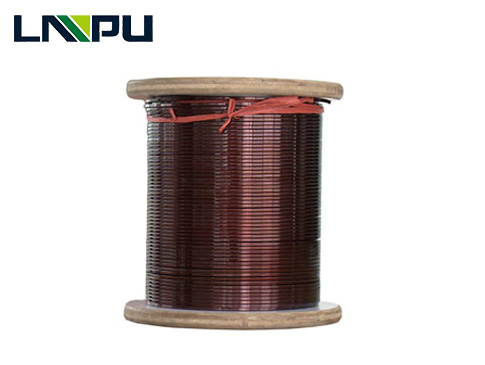
The production of enameled copper wire required raw materials
The raw materials used in the production of enameled copper wire directly determine the core performance of the product, the conductor and insulating varnish need to be strictly screened to ensure compliance with industry standards and the needs of different application scenarios, as follows:
- Bare copper conductor
Bare copper conductor is the core conductive part of copper enameled wire, its purity and specifications directly affect the conductive efficiency, resistance value and mechanical properties. The raw materials used in the production of 8mm diameter high-purity copper rods, copper content of 99.99% or more, can minimize the current transmission loss, to avoid excessive impurities caused by heat, conductivity instability and other issues. Copper rods need to be strictly tested to ensure that there is no oxidation, no inclusions, no cracks, smooth surface. Subsequently, through a multi-stage drawing process, step by step to the design wire diameter, wire gauge range of 30AWG (micro-fine wire, used for precision electronics) to 12AWG (coarse wire, used for large motors, transformers), the stretching process needs to be strictly control the speed and tension, to avoid uneven stretching, surface scratches and other defects.
2. Insulating varnish material
Insulating varnish is the insulating layer of enameled copper wire, and its performance determines the temperature resistance level, insulation strength, mechanical toughness and service life of the product, and it is necessary to choose the suitable type according to the working environment of the terminal equipment, and the specific classification and characteristics are as follows:
– Polyurethane paint: good flexibility, can be directly welded, temperature resistance 105-130 ℃, applicable to conventional electronic components, small motors, relays and other common scenes.
– Polyester lacquer: heat resistance, stable mechanical properties, good adhesion, temperature resistance 130-155 ℃, high insulation strength, not easy to aging, is the most versatile type, widely used in home appliances, ordinary motor field.
– Polyester imide varnish: modified on the basis of polyester varnish, temperature resistance 155-180℃, with good heat resistance and chemical resistance, suitable for automotive electronics, industrial motors and other high temperature working conditions.
– Polyamideimide enamel: chemical resistance, radiation resistance, wear resistance, temperature resistance 180-220 ℃, high mechanical strength, suitable for aerospace, high-end precision instruments and other harsh environments.
– Polyimide paint: outstanding insulation performance at ultra-high temperatures, temperature resistance of 220 ℃ or more, can be short-term operation at 300 ℃, insulation strength is very high, suitable for high-end precision electronics, aerospace and aviation extreme environments.
The complete production process of enameled copper wire
Enameled copper wire manufacturing is a precision continuous industrial process, which needs to go through seven core links, each link has a strict operation specification and quality requirements, as follows:
1. Copper rod drawing
Copper rod drawing is the first core process, the purpose is to stretch the coarse copper rod to the target diameter bare copper wire. First of all, the 8mm high purity copper rod to clean the oxidation layer, oil and impurities, into the wire drawing machine using a multi-channel continuous stretching, each channel corresponds to a set of decreasing aperture molds, copper rods in the tension under the action of the refinement of the length increases, the volume remains unchanged. Stretching speed 5-20m/min (the finer the wire diameter, the slower the speed), real-time monitoring of the surface quality and wire diameter accuracy, after stretching cooling down to avoid high-temperature oxidation, and then enter the annealing process.
2. Annealing softening treatment
After drawing, the bare copper wire becomes hard and the toughness decreases due to cold working, it needs to be softened by annealing before it can be painted. Annealing is carried out in a continuous annealing furnace, which is filled with inert protective gas to isolate the air and prevent oxidation of the copper wire. Annealing temperature of 400-600 ℃ (the finer the diameter of the wire, the lower the temperature), the copper wire to stay 5-10 minutes, through the high temperature to make the grain recrystallization, to restore softness and toughness, to remove the internal stresses, and after the annealing of the slow cooling to room temperature to avoid embrittlement to ensure that the subsequent coating smoothly.
3. Insulation paint coating
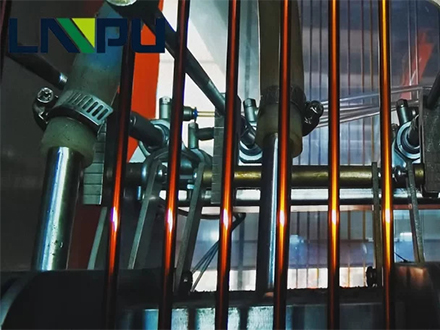
Insulation paint coating is the core process of forming the insulation layer, using the “multiple thin coating” principle (to avoid a single thick coating resulting in solvent residue, film defects). According to the specifications of the wire to choose the coating method: felt coating is suitable for fine wires, through the adjustment of felt tightness control thickness; mold coating is suitable for thick wires, through the mold gap precision control thickness. Control the paint temperature 25-35 ℃, viscosity 20-50 mPa – s, each layer of paint through the initial drying and then coated with the next layer, coating 3-8 times, paint film thickness control in 0.01-0.1mm.
4. High temperature curing
High-temperature curing is the key to transform the insulating varnish into a dense and solid film, in the segmented temperature-controlled curing furnace, divided into the preheating section (150-200 ℃, slow evaporation of solvents), curing section (300-500 ℃, the resin cross-linking to form an insulating layer, time 10-20 minutes), the cooling section (gradually cooled down to room temperature, to avoid oxidation of the varnish film and embrittlement). Catalytic combustion device in the furnace environmental protection recovery of heat, strict control of curing temperature: too low a temperature leads to poor adhesion of the paint film, too high leads to film embrittlement easy to crack.
5. Surface lubrication
Cured enameled copper wire friction coefficient is high, need to apply special lubricants to reduce friction, to protect the subsequent high-speed winding smoothly, to avoid the paint film scratches. The lubrication method is spraying or dipping coating, using silicone oil or paraffin lubricant compatible with insulating varnish, strictly controlling the amount of coating, and simply drying after coating to ensure that the surface of the wire is dry and smooth, and then enter the online monitoring link.
6. Online size and tension control
This section guarantees product consistency and performance stability, and is divided into size monitoring and tension control. The size monitoring adopts laser calibrator to monitor the outer diameter and uniformity of the paint film in real time, with automatic alarm for deviation beyond the range, so as to adjust the production parameters in time; the tension control system controls the force in the whole process, and adjusts the tension according to the specification of the wire (5-20N), so as to avoid over-stretching of the wire (thinning of the wire diameter and increase of the electrical resistance) or loosening of the wire (confusion of the arrangement and uneven winding).
7. Winding and molding
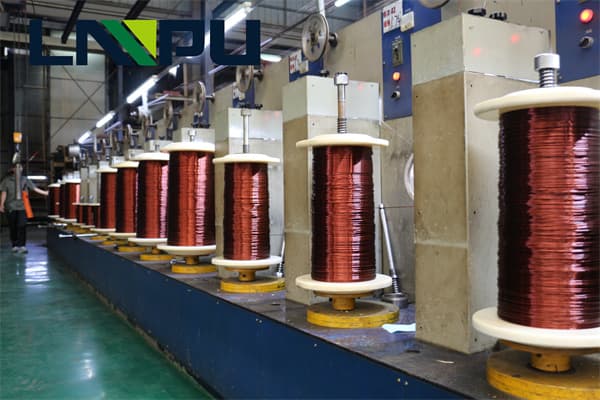
Winding is the last process, completed by the spooling machine, the speed and the pitch of the wire rows are adjusted according to the specifications of the wire and the size of the bobbin, to ensure that the wire is arranged evenly and tightly, and there is no winding and jamming of the wire. The bobbin is cleaned before rewinding, the tension and wire arrangement are monitored in real time during the rewinding process, and the speed of rewinding is synchronized with the production speed of the previous sequence (5-15m/min, the finer the diameter of the wire, the slower the speed). Wrap the reel with packaging film after winding, labeling specifications, batch, production date and other information, to facilitate quality traceability and use.
Enameled copper wire production process quality control
Quality testing throughout the production process, from raw materials to finished products, each link needs to be strictly controlled, the core testing programs and measures are as follows:
1. Electrical performance testing
Electrical performance is the core indicator, determining the use of safety and reliability, mainly testing conductor resistance and insulation performance:
Conductor resistance testing: using a high-precision multimeter, stripping the paint film on both ends of the wire, and closely connecting the probe with bare copper to avoid contact resistance affecting the results. The resistance value should be in line with the corresponding wire standard, too high will lead to serious heat generation and increase in energy consumption, too low there may be a lack of purity of the conductor or wire diameter deviation. Each batch of sampling test ratio of not less than 3%, failed to expand the sampling, until all qualified.
Insulation performance test: using a high-voltage tester, put the enameled copper wire into the insulating oil, electrodes were connected to the bare copper and insulating oil, apply 1-10kV high voltage and keep it for 1 minute, observe whether it is breakdown, leakage. No breakdown and insulation resistance of not less than 100MΩ is qualified, and at the same time, test the voltage resistance of the paint film to avoid insulation failure in long-term use.
2. Paint adhesion test
Paint adhesion is the combination of insulating paint and copper conductor strength, poor is easy to fall off the skin triggered by short circuit, using tape stripping test: select 10cm long enameled copper wire, sanding to remove the surface lubricant, paste a special test tape (such as 3M tape) and crushed without air bubbles, fast tearing to observe whether the paint film is peeled off. Tape without paint film residue is qualified, no less than 5 samples per batch, unqualified need to adjust the paint, curing process.
3. Mechanical durability test
Enameled copper wire will be subjected to mechanical stress in winding and installation, and need to have good durability, mainly for bending and tensile test:
Bending test: according to the wire specifications to determine the bending radius (5-10 times the diameter of the wire), the wire around the radius of 180 ° repeated bending 5-10 times, to observe whether the paint film is cracked off, no abnormality that is qualified, failing to adjust the curing temperature, the number of times of paint.
Tensile test: use the tensile testing machine to fix both ends of the wire, slowly apply force to break, record the tensile strength and elongation (not less than 15%), not up to standard, then check the annealing process and raw material quality.
4. Paint film thickness test
Paint film thickness uniformity directly affects the insulation and mechanical properties, too thin easy to breakdown, too thick to affect the flexibility and increase costs, commonly used two detection methods:
Micrometer test: applicable to conventional specifications, measuring the wire at different locations (at least 3 points) outside diameter, stripping the paint film to measure the diameter of the bare copper, the difference between the two is the thickness of the paint film, the deviation is controlled within ± 0.005mm, the average thickness in line with the standard.
X-ray inspection: suitable for micro-fine wire and high-precision products, through the X-ray accurate thickness measurement (accuracy of 0.001mm), can detect the circumference and length of the thickness deviation, no need to peel off the varnish film, no damage to the product, suitable for batch inspection.
5. Production environment control
The temperature and humidity of the production environment directly affects the quality of coating and curing, the workshop should be constant temperature and humidity (temperature 20-30 ℃, humidity 40%-60%): too high humidity will easily lead to bubbles and pinholes in the paint film, too high a temperature will affect the thickness of the paint, too low will be difficult to apply paint, curing slower. At the same time to keep the workshop clean, to avoid dust impurity pollution, prohibit open fire, good ventilation, to prevent solvent gas accumulation, to ensure production safety.
Enameled copper wire common problems and solutions
Production and use, by raw materials, technology, environmental impact, enameled copper wire is prone to three types of common problems, specific solutions are as follows:
1. Insulation cracking, peeling
Insulation cracking, peeling manifested as cracks in the paint film, peeling, and in serious cases, bare copper exposure triggered short circuit, the main reason is the curing temperature is abnormal (too high embrittlement, too low curing is not sufficient), equipment friction or burrs scratching the paint film, a single coat of paint is too thick, resulting in solvent residue, and the insulation of paint quality is poor or the surface of the copper conductor has oxidized oil, can be optimized by optimization of the curing temperature curve, sanding equipment burrs and adjusting the equipment pitch and tension, the use of “multiple thin coatings”. The problem can be solved by optimizing the curing temperature curve, grinding the equipment burrs and adjusting the equipment spacing and tension, adopting the “multiple thin coating” process, choosing high-quality insulating varnish and cleaning the oxidized oil stains before stretching the copper conductor.
2. Copper wire oxidation, corrosion
Copper wire oxidation, corrosion manifested as bare copper black, paint film bulging off, will affect the conductivity and service life, mainly due to high humidity in the production environment, annealing protective atmosphere caused by oxidation of the copper surface, insulating varnish density is poor, and the finished product storage environment is humid and corrosive gases caused by strengthening the workshop dehumidification will be humidity control at 40-60%, optimize the annealing process to ensure that the protective atmosphere is sufficient, the use of good density and corrosion-resistant paint, to solve the problem of oxidation, corrosion. The insulating varnish with good denseness and strong weather resistance is selected, and the storage environment is standardized to keep dry, ventilated and well-packed to solve the problem.
3. Welding difficulties
Welding difficulties manifested in the solder joints are not solid, poor conductivity, will affect the terminal assembly, the main reason is that the ordinary enameled wire paint film can not be welded and welded before the peeling or peeling is not complete, welding temperature is not enough and flux selection is not appropriate, can be through the ordinary enameled wire welding with sandpaper or soldering iron iron removal of the paint film before polishing, welding temperature adjustments to ensure that the welding temperature to 260-300 ° C welding melting, selection of the appropriate flux to avoid Too corrosive, or choose straight welding enameled wire to improve welding efficiency and quality.
How to choose a professional copper enameled wire manufacturer?
The quality of enameled copper wire determines the reliability and service life of the terminal equipment, selecting a professional manufacturer needs to pay attention to the following three core dimensions, covering the raw materials, production, and service of the whole process, to ensure product quality and supply stability:
1. Raw material and production strength
Professional manufacturers strictly control the procurement of raw materials, conductor selection of 99.99% or more high-purity copper rod, cooperation with well-known suppliers, each batch of testing purity and surface quality; insulating varnish selection of brand-name products, according to the needs of the appropriate varnish, viscosity, solid content and other indicators, the establishment of raw material traceability system. Meanwhile, we are equipped with a full set of advanced equipments, such as fully automatic wire drawing machine, continuous annealing furnace, high-precision enameling machine, etc., which reduces manual intervention, and the equipments are highly accurate and regularly maintained and calibrated to ensure the consistency of the products and the productivity, and to guarantee the quality of the products from the source.
2. Quality Control and Qualification
With IEC, UL, NEMA and other international and domestic industry certifications, the products comply with international standards and can meet the needs of different countries and regions; at the same time, we have ISO9001 and ISO14001 system certifications to ensure the standardization of production and standardization. We have established a perfect whole-process testing system, with strict testing of raw materials, sampling and testing of various processes during production, comprehensive testing of electrical performance, adhesion and other indexes of finished products, and issuing test reports for each batch to establish a quality traceability system, which facilitates the troubleshooting and treatment of problems and guarantees stable quality.
3. Supply chain and customized service
With stable production capacity, we can organize production in time according to customer orders to ensure on-time delivery and avoid affecting customer production schedule. Equipped with a professional technical team to provide customers with product selection advice, solve technical problems in the production and use of the process; perfect after-sales service, quick response to quality feedback, provide return and replacement services. At the same time, according to customer demand, we can provide special wire diameter, temperature resistance level, special packaging and other customized production services to meet the needs of different scenarios.
Summary
The production of enameled copper wire is a systematic project integrating materials, precision processing, and process control, and each link needs to be strictly controlled from copper rod drawing, annealing, painting, curing to finished product testing. High-quality enameled copper wire can improve the efficiency of electrical equipment, extend service life and reduce risk, production, procurement, application side of the process, quality standards and problem solving methods, can efficiently control the quality, choose the right product.
With the development of electrical, electronic, automotive and other industries, copper enameled wire to fine diameter, high temperature, high efficiency development, choose a professional and reliable manufacturers, is to protect product quality and production stability of the key, I hope this article can provide reference for relevant practitioners.