Under the wave of global electrification, the performance upgrade of electrical equipment such as motors, transformers, inductors, etc. cannot be separated from the support of core basic materials.
Many electrical engineers, purchasing specialists in the selection of models will be confused: a wide variety of insulated wire on the market, why enameled wire can become the first choice? Its core advantages in the end where? Copper enameled wire and aluminum enameled wire how to choose?
What is enameled wire?
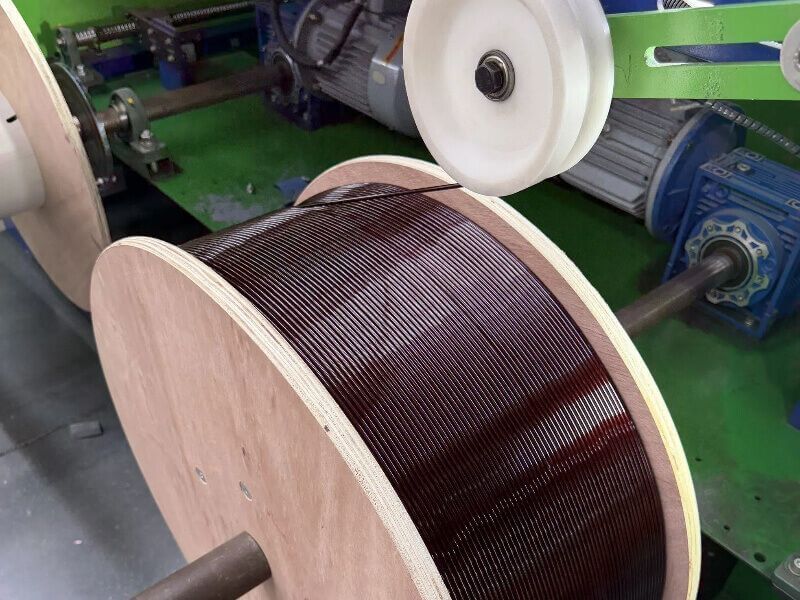
Enameled wire, also known as winding wire, is a copper or aluminum as the conductive core, coated with an ultra-thin polymer enamel insulating layer of special wires. Its core role is to realize the efficient and reversible conversion of electrical energy with magnetic and mechanical energy.
Unlike ordinary bare wire and PVC insulated wire, enameled wire has both ultra-thin, insulating and flexible insulation layers, which can ensure electrical isolation between wires and also realize high-density winding of coils.
According to NEMA MW 1000 standard, the heat resistance of enameled wire covers 105℃ to 240℃, and its service life under rated temperature can reach 20,000 hours, which is fully suitable for the long-term operation of various types of electrical equipment.
Currently, with the rapid development of new energy vehicles, photovoltaic energy storage, industrial automation and other fields, the market demand for high-performance enameled wire (high temperature resistance, high insulation, lightweight) continues to rise, and its core advantages have become the key basis for users to select.
Core Advantage 1: Electrical Insulation
Electrical insulation is the core function of enameled wire, which is also the key advantage that distinguishes it from other wires. The enameled insulation layer of enameled wire can form a tight barrier between the conductive core and the external environment.
The core role of this barrier is to ensure that the current is transmitted only along the specified path, which fundamentally eliminates electrical short circuits, leakage and other problems, and avoids the occurrence of equipment failure and safety hazards.
There are two key indicators to measure the insulation performance of enameled wire: breakdown voltage and dielectric strength. Breakdown voltage refers to the maximum voltage that the insulating layer can withstand, the higher the value, the better the insulation performance, which can be adapted to high-voltage equipment scenarios.
Dielectric strength reflects the ability of the insulating layer to resist electrical stress. High-quality enameled wires with stable dielectric strength can maintain insulation performance under long-term electrical loads, reducing the risk of system failure.
For motors, transformers and other core equipment, the insulation performance of high-quality enameled wire can effectively reduce the potential risk of leakage, reduce the equipment failure rate and maintenance costs, to protect the long-term stable operation of equipment.
Core advantage 2: Excellent heat resistance
Motors, transformers, generators and other equipment in the process of operation, will be due to the current transmission generates a lot of heat, if the wire heat resistance is not enough, it is very easy to appear insulation aging, embrittlement or even breakdown, resulting in equipment damage.
One of the core advantages of enameled wire is its excellent heat resistance, and its enameled insulation layer can maintain a stable insulation effect in high temperature environments to meet the temperature requirements of different scenarios.
According to the NEMA MW 1000 standard, the heat-resistant grade of enameled wire is categorized into several grades, commonly 105℃, 130℃, 155℃, 180℃, 220℃, 240℃, etc., and each grade corresponds to a different upper limit of long-term operating temperature.
High-temperature enameled wires of 180℃ and above are suitable for high-temperature working conditions such as high-performance motors, power transformers, aerospace equipment, etc. Conventional grades of 105℃-155℃ are suitable for low and medium-temperature scenarios such as household appliances and small electronic components.
Excellent heat resistance not only extends the service life of the enameled wire itself (up to 20,000 hours at rated temperature), but also improves the reliability of the entire electrical equipment and reduces the frequency of equipment replacement due to high temperature.
With the development of new energy vehicles and industrial heavy-duty equipment, the demand for high-temperature resistance enameled wire is becoming more and more urgent, and its heat resistance advantage has become a key factor to enhance the competitiveness of the equipment.
Core Advantage 3: Chemical Resistance and Mechanical Durability
The application scenarios of electrical equipment are complex and varied, and some of the equipment needs to operate in the environment of multi-chemical media and strong mechanical stress, which puts forward high requirements for the durability of enameled wires. The advantages of enameled wires in this field are particularly outstanding and are mainly reflected in two aspects.
The enameled insulating layer of enameled wire has excellent chemical resistance and can effectively resist the erosion of moisture, oil, solvents and other chemical media, protecting the conductive core from corrosion and degradation. In the automotive industry, the enameled wire needs to be in long-term contact with engine oil, fuel and other media, its chemical resistance to ensure that the conductor performance is stable, to avoid corrosion resulting in electrical system failure.
At the same time it has good flexibility and mechanical strength, can withstand bending, stretching, impact and other mechanical stress, in the coil winding, equipment installation process, the insulation layer is not easy to crack, fall off.
Copper Enameled Wire vs Aluminum Enameled Wire
The core performance of enameled wire is closely related to the conductor material, the two mainstream conductor materials in the industry are copper and aluminum, there are significant differences in their characteristics, performance and applicable scenarios, the selection needs to be accurately matched with the needs.
Copper Enameled Wire
With excellent conductivity and good thermal stability, copper enameled wire occupies a dominant position in power transmission, motor winding, transformer manufacturing and other fields. It utilizes high-purity copper as the conductor and has outstanding electrical conductivity.
The high conductivity of copper ensures efficient current transmission and reduces energy loss, while the enamel coating prevents oxidation and corrosion of the copper conductor, significantly extending its service life.
In addition, copper enameled wire also has good mechanical strength, can withstand a certain degree of mechanical stress and deformation, in the complex working environment can also maintain stable performance, suitable for high performance requirements of the scene.
Aluminum Enameled Wire
Compared to copper enameled wires, aluminum enameled wires are preferred in specific scenarios due to their light weight and relatively low cost. Aluminum has a much lower density than copper, which reduces the overall weight of the equipment and lowers transportation and installation costs.
Although aluminum’s conductivity is slightly inferior to copper, it performs well under specific conditions such as low-frequency current transmission, and its significant price advantage can effectively control procurement costs.
It is especially suitable for areas with strict requirements on weight, such as aerospace, new energy vehicles, etc., which can meet the basic needs of use, but also realize the lightweight upgrade of equipment.
How to choose enameled wire scientifically?
In order to give full play to the core advantages of enameled wire, it is necessary to combine the working conditions of the equipment, performance requirements, cost budget scientific selection, to avoid improper selection of the advantages can not be played, and even affect the operation of the equipment, shorten the service life of the equipment.
Determine the conductor material
Conductor material selection, the core is to balance the conductivity, weight and cost, combined with the performance requirements of the equipment and the use of the scene to accurately determine, to avoid blind selection.
If the equipment on the conductive efficiency, operational stability, mechanical strength requirements, such as high-end industrial motors, high-voltage transformers, precision electronic components, give priority to the selection of copper enameled wire, which can effectively reduce energy loss and extend the life of the equipment.
If the equipment on the weight of strict restrictions, and limited budget, such as new energy vehicles, aerospace equipment, large civilian transformers, can choose aluminum enameled wire, not only to meet the basic needs of the use, but also to achieve the goal of lightweight, low-cost.
Selection should be noted, aluminum enameled wire need to increase the wire diameter to achieve the same conductive effect with copper enameled wire, need to be calculated in advance of the installation space, to avoid too large a wire diameter can not be adapted to the winding design.
Matching insulation level
Insulation level directly determines the heat resistance of the enameled wire, the selection of the actual working temperature of the equipment needs to be strictly matched to avoid insufficient or high insulation level, resulting in safety hazards or cost waste.
The core of insulation grade selection is to “match the long-term operating temperature of the equipment”, which is usually 10-20℃ higher than the normal operating temperature of the equipment, to ensure that the enameled wire can still maintain stable insulation performance under extreme working conditions.
For high-temperature applications, such as industrial heavy-duty motors, aerospace equipment, and high-temperature chemical equipment, enameled wires made of polyimide can be selected, with a heat-resistant temperature of up to 250°C, which is suitable for harsh high-temperature working conditions.
For conventional scenarios, such as household appliances, small motors, ordinary electronic components, you can choose 105 ℃, 130 ℃, 155 ℃ grade enameled wire, not only to meet the needs of the use, but also to effectively control the procurement cost.
Determine the wire diameter (wire gauge)
Wire gauge (AWG) is an important specification parameter of enameled wire, directly affecting the current-carrying capacity, flexibility and installation suitability, selection needs to be combined with the current requirements of the equipment and the installation space to make a comprehensive judgment.
Wire gauge value and wire thickness is inversely proportional to the higher the value of the gauge, the finer the wire, the better the flexibility, but the weaker the current-carrying capacity; the lower the value of the gauge, the thicker the wire, the stronger the current-carrying capacity, but the worse the flexibility.
For high-current equipment, such as large transformers, industrial motors, you need to choose a lower wire gauge value of coarse wire diameter enameled wire, to ensure that it can withstand higher currents, to avoid excessive resistance to generate too much heat.
For precision electronic components and small coils, such as sensors and micro-motors, fine gauge enameled wires with higher gauge values should be selected to facilitate high-density winding and to fit into tight installation spaces.
Combination of application requirements
Different equipments have different working environments, different operation requirements, and different performance focuses on enameled wire, which need to be combined with specific application scenarios to ensure that the enameled wire is highly compatible with the equipment needs.
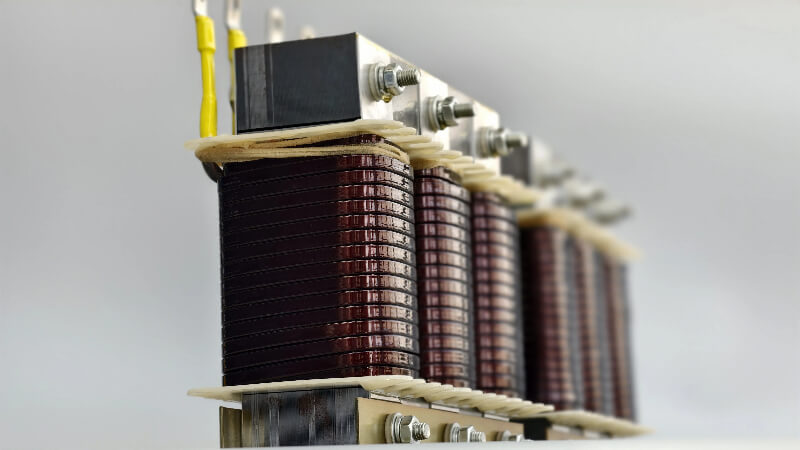
Transformer equipment, the core demand is high-voltage resistance, low loss, need to choose high breakdown voltage, dielectric strength and stability of the enameled wire, give priority to the selection of copper enameled wire, to ensure stable power transmission.
Audio equipment, microelectronic components, the core demand is good flexibility, high winding density, need to choose fine wire diameter, excellent flexibility enameled wire, such as polyurethane insulated enameled wire, to facilitate precision winding.
Automotive, chemical field equipment, the core demand is chemical resistance, vibration resistance, need to choose oil resistance, solvent resistance, high mechanical strength enameled wire, suitable for complex and harsh working environment.
For household equipment, the core demand is cost-effective, safe and reliable, can choose conventional insulation grade, copper or aluminum enameled wire, balancing performance and cost to meet the needs of daily use.
Application Scenarios
The core advantages of enameled wire are fully reflected in all kinds of electrical equipment. The application scenarios are wide-ranging, covering many areas of the electrical industry, and the advantages of enameled wire are emphasized differently in different scenarios. From large motors and high-voltage transformers in industrial production, to household appliances in daily life, to aerospace equipment in high-end fields, enameled wire has become the core support for the stable operation of equipment.
Motor field
Enameled wire is the core material for making motor windings in the manufacturing of electric motors, and the quality of the windings directly determines the operating efficiency, stability and service life of the motors, and the advantages of enameled wire are perfectly adapted to the working requirements of electric motors.
Enameled wire’s tight and firm winding effect can maximize the use of the internal space of the motor, enhance the coil slot full rate, laying the foundation for the efficient operation of the motor. Its excellent electrical insulation can eliminate the potential danger of short-circuit between windings and ensure the stable transmission of current.
Motor operation will generate a lot of heat, enameled wire excellent heat resistance can adapt to the high temperature environment inside the motor, to avoid aging and breakdown of the insulation layer, to ensure that the motor long-term continuous operation.
At the same time, its good mechanical durability, can withstand the mechanical stress of coil winding and the vibration of motor operation.
Whether it is an industrial motor that bears heavy loads in industrial production, automobile starter, or a micro motor in small equipment, enameled wire can play a central role in ensuring efficient and stable operation of all kinds of motors, and is an indispensable core material for motor manufacturing.
Transformer field
Transformer as power transmission, voltage conversion of the core equipment, the wire insulation, electrical conductivity and heat resistance performance requirements are extremely high, enameled wire core advantages just fit the operational needs of the transformer, become the first choice of transformer winding materials.
Transformer operation in a high-voltage environment, enameled wire high breakdown voltage and high dielectric strength, can effectively resist high-voltage electrical stress, to avoid insulation breakdown, to ensure the safety of power transmission. Its excellent heat resistance can adapt to the high temperature generated by the long-term load operation of the transformer, to ensure stable insulation performance.
From the high-voltage transformers in the power grid that bear long-distance power transmission to the small transformers in industrial control panels and new energy inverters, enameled wires are the core support to ensure their normal operation and guarantee the stability and efficiency of power transmission.
Automotive industry
Automotive electrical systems are subject to high temperatures, vibration, multi-chemical media in the harsh environment for a long time, the durability of the wire, lightweight and stability requirements are extremely high, enameled wire by virtue of its comprehensive advantages, widely used in automotive manufacturing of various types of electrical components.
In the automotive ignition system, starter, generator and other core electrical components, enameled wire needs to be in long-term contact with engine oil, fuel and other chemical media, its strong chemical resistance can effectively resist corrosion, to ensure that the conductor performance is stable, to avoid the failure of the electrical system.
Whether it is a traditional fuel vehicle or a new energy vehicle, enameled wire is the core component of its electrical system, adapting to the harsh working environment of the automobile, providing a guarantee for the safe and stable operation of the automobile.
Aerospace
The electrical system of aerospace equipment needs to operate in the harsh environment of high altitude, high temperature, low temperature, strong radiation, multi-chemical media, the performance requirements of the conductor to reach the industry’s top level, enameled wire has become the core choice of the field by virtue of its excellent comprehensive performance.
Avionics equipment, sensors, actuators and other components of the aircraft electrical system, are used in high-temperature enameled wire, its heat-resistant temperature of up to 180 ℃ and above, can adapt to the extreme temperature changes in the high altitude, to maintain the stability of the insulation properties. At the same time, its chemical resistance can resist the erosion of special media at high altitude.
Household appliances
Household appliances are closely related to people’s daily life, and their electrical components need to be safe, reliable, cost-effective, and long service life. Enameled wires precisely meet these needs and are widely used in the manufacture of various types of household appliances.
Enameled wire is used to make the windings of compressors, motors and other core components in common household appliances such as refrigerators, air conditioners and washing machines. Its good electrical insulation performance can eliminate the hidden danger of leakage and ensure the safety of use; excellent durability can ensure the long-term stable operation of home appliances and reduce the occurrence of failures.
Electronic communication field
Most of the equipment in the field of electronic communication is precision components, the flexibility of the wire, winding density and insulation performance requirements are high, enameled wire by virtue of its ultra-thin insulating layer, the advantages of good flexibility, become the ideal choice in this field.
In printed circuit boards (PCB), inductors, solenoids, relays, speakers and other electronic components, enameled wire’s fine wire diameter, high flexibility characteristics, can achieve high-density precision winding, suitable for miniaturization, precision electronic component design needs.
Enameled wire as the electrical industry’s “basic pulse”, its excellent electrical insulation, excellent heat resistance, strong chemical resistance and mechanical durability, as well as high conductivity, high space utilization, versatility and other advantages, so that it has become the core of all types of electrical equipment.
It not only solves the core pain points of short circuit, high temperature and corrosion in the operation of electrical equipment, but also enhances the efficiency of the equipment, prolongs the service life, reduces the cost, and supports the upgrading and iteration of the electrical equipment.
We provide a full range of enameled wire products, covering copper enameled wire, aluminum enameled wire, covering 105 ℃ – 240 ℃ full heat-resistant grade, including enameled flat aluminum wire and other special specifications, can accurately match the needs of different application scenarios.