What is copper winding wire?
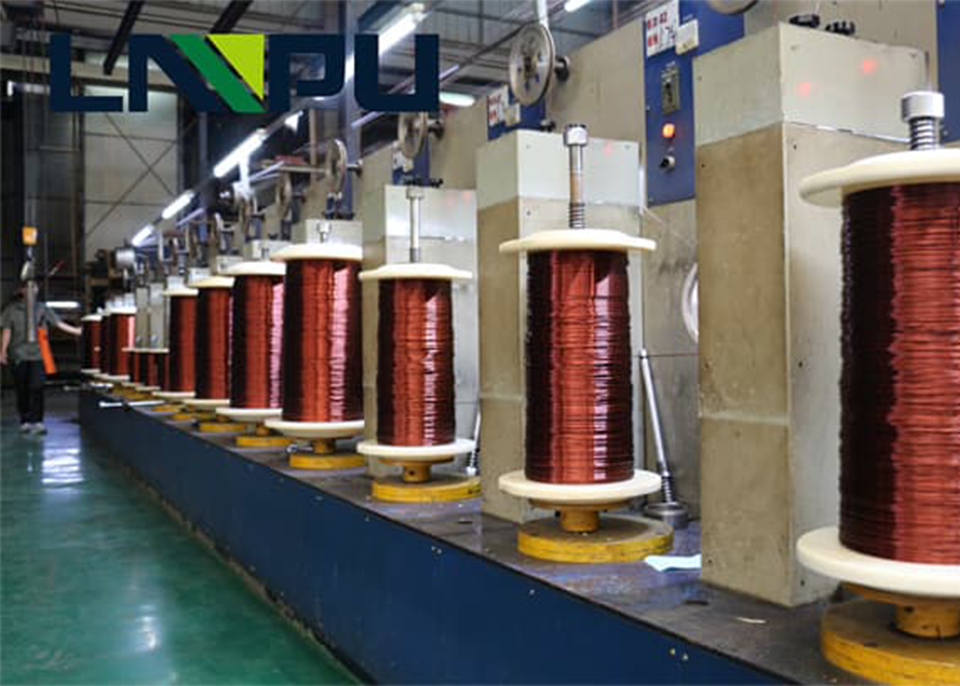
Copper winding wire is one of the most critical conductive components in electrical engineering, with high-quality pure copper as the core conductor, covered with an insulating layer (e.g., paper, fiberglass, etc.), unlike ordinary copper wires, copper winding wire is processed through a special process, which results in a higher purity of the conductor (usually more than 99.9%), better conductivity, and a close combination of the insulating layer and the conductor to adapt to the working requirements in different environments. The insulation and conductor are tightly bonded, which can be adapted to the working requirements in different environments.
Types of Copper Winding Wire
Enameled copper winding wire is characterized by a thin (enameled) insulating layer on the conductor surface, the thickness of the insulating layer is usually between 0.05-0.2mm, which can effectively protect the conductor without increasing the overall thickness of the winding wire, which is very suitable for electrical equipment with limited space.
Enameled copper winding wire insulation materials, common polyester (PEW), polyester imide (EIW), polyamide imide (AIW), etc., different materials of the insulation layer, its temperature resistance level, insulation performance there are differences, can be adapted to different working environments.
Polyimide Insulated Copper Winding Wire
Polyimide insulated copper winding wire has excellent resistance to high temperature and chemical corrosion, and is the preferred type of winding wire for extreme environments. Polyimide insulated copper winding wire has a higher temperature resistance level, with a long-term working temperature of more than 200℃, and excellent chemical stability, which is resistant to acid, alkali, oil, organic solvents and other chemicals, and will not be chemically corroded, leading to insulation layer breakage, loss of electrical conductivity. The conductivity will not be reduced due to chemical corrosion, which will lead to the breakdown of the insulation layer.
Fiberglass Insulated Copper Winding Wire
Fiberglass insulated copper winding wire has excellent insulation performance, can withstand high-voltage impact, suitable for high-voltage electrical equipment winding, to avoid high-voltage insulation breakdown, short-circuit and other issues; glass fiber insulation temperature rating up to 180 ° C – 200 ° C, can be a long time in high temperature environments to maintain stable insulation performance, will not be overheated resulting in aging and damage to the insulation layer; at the same time, the mechanical strength of the fiberglass material is very high, can withstand a large number of At the same time, the mechanical strength of glass fiber material is very high, can withstand large mechanical stress, vibration and wear, suitable for long-term in the high load, high vibration state of heavy industrial equipment.
Paper Insulated Copper Winding Wire
As an insulating layer, insulating paper can form a good insulating barrier, effectively resisting the impact of high-voltage electric field, preventing the insulation breakdown between winding lines and between winding lines and iron core, and ensuring the safe operation of high-voltage equipment. At the same time, the insulating paper has a certain degree of temperature resistance and oil absorption properties, in the oil-immersed transformer, the insulating paper can absorb transformer oil, to further enhance the insulation properties and heat dissipation effect, to extend the service life of the transformer; In addition, the paper insulated copper winding wire can also be used in some of the high power density of the electrical equipment, as a high-voltage windings of the core components, to ensure that the equipment’s conductive efficiency and safety.
Advantages of copper winding wire
Excellent electrical
Conductivity is the core performance indicator of winding wire, and copper is one of the most conductive metals in nature, with a conductivity as high as 58 MS/m, far exceeding that of other commonly used conductor materials such as aluminum and copper-clad aluminum (the conductivity of aluminum is only about 35 MS/m). With its excellent conductivity, copper winding wire can minimize the resistance loss during current transmission, improve the efficiency of power transmission, and achieve the goal of “energy saving and consumption reduction”.
Excellent thermal stability
Electrical equipment in the operation process will generate a lot of heat, if the thermal stability of the winding wire is not good, the insulation layer is easy to aging, breakage, which will lead to short-circuit, failure, and even shorten the service life of the equipment. One of the core advantages of copper winding wire is its excellent thermal stability. Combined with different types of insulation, it can be adapted to different temperature environments ranging from 120℃ to over 200℃ to meet the working requirements of various types of equipment.
Superior mechanical properties
In the process of production, installation and operation of electrical equipment, winding wire will be subject to mechanical stretching, bending, vibration and other external forces, if the mechanical properties are poor, it is easy to conductor breakage, insulation layer damage and other problems, affecting the normal operation of equipment. Copper winding wire has strong mechanical strength, abrasion resistance and flexibility, which can effectively resist the influence of various external forces and adapt to complex working conditions.
Good adaptability and flexibility
There are many types of electrical equipment, and the structure, size, working environment and performance requirements of different equipment vary greatly, which requires good adaptability and flexibility of winding wire. Copper winding wire, with its excellent processing performance and diversified types, can meet the customized needs of different equipment and adapt to various application scenarios.
Copper winding wire vs .
Aluminum is often seen as a cost-effective alternative to copper when selecting winding wire for electrical applications, and each has its own advantages and disadvantages for different project needs. Aluminum winding wire offers significant advantages: it is lightweight, which helps reduce the overall weight of the equipment – especially important for power distribution applications. In addition, it has a lower upfront cost, making it an economical choice for larger transformers, and it has a greater thermal storage capacity per unit weight compared to copper.
However, aluminum’s drawbacks generally make copper a better choice for most high-performance applications. Aluminum is less conductive and requires more windings, making it unsuitable for space-constrained designs; it oxidizes more quickly, requiring additional coatings and ongoing maintenance; and it is not as corrosion resistant as copper. In contrast, copper-wound wire offers higher conductivity and efficiency, which reduces energy loss and operating costs, while requiring fewer windings in compact applications. It also offers superior corrosion resistance, slower oxidation rates and greater mechanical strength for heavy loads and harsh environments. While its upfront cost is higher, its long-term efficiency and durability more than make up for it – and its higher density (with minimal weight gain) is irrelevant for most applications.
Application Scenarios for Copper Winding Wire
Transformers: The core component of a transformer is the winding, which is used to raise and lower the voltage, and copper winding wire is the material of choice for transformer windings due to its excellent conductivity and thermal stability. Whether it is a high-voltage transformer in the power system, distribution transformers, or industrial production of medium-frequency transformers, high-frequency transformers, are widely used copper winding wire.
Reactor and transformer: the excellent conductivity and stability of copper winding wire can ensure the measurement accuracy and operational stability of reactor and transformer, avoiding measurement errors and equipment failures due to poor winding performance, and safeguarding the normal operation of the power system.
New Energy Vehicles: With excellent conductivity, thermal stability and mechanical properties, copper winding wire can improve the efficiency and power density of the drive motor, reduce energy consumption and extend the range. For example, the drive motor of Tesla Model 3 adopts flat copper winding wire, which improves slot fullness (>75%), reduces copper loss, and improves power density by more than 20%; the inductors and relays in the power battery management system of new energy vehicles also need copper winding wire to realize the transmission and control of the current to ensure the safety and stability of the battery system.
Wind power and photovoltaic: the stator and rotor windings of wind turbines use glass fiber or polyimide insulated copper winding wire, which can adapt to outdoor high temperature, high vibration, and humid environment to ensure long-term stable operation of the generator; it can withstand high loads and vibrations, and its service life can reach more than 20 years, which reduces the maintenance cost.
Energy storage equipment: copper winding wire to realize the current storage and transmission, the stability and efficiency of copper winding wire can ensure the safe operation of energy storage equipment and energy conversion efficiency, help the development of energy storage industry.
Industrial motors: All kinds of motors used in industrial production (e.g. AC asynchronous motors, permanent magnet synchronous motors, DC motors, etc.), their stator and rotor windings are widely used copper winding wire. Reduce industrial energy consumption; frequency control motors using copper winding line, can reduce the skin effect on the high frequency current obstruction, keep low loss, improve motor efficiency; copper winding line temperature resistance, abrasion resistance, corrosion resistance, can be effectively adapted to these environments, prolong the service life of the motor, reduce the cost of maintenance.
Household appliances: Compared with those using aluminum winding wire, those using copper winding wire have higher energy efficiency, lower noise, longer service life, and are more popular among consumers.
Electronic equipment: the use of miniature enameled copper winding wire, can achieve miniaturization, lightweight design, while ensuring good conductivity and stability.
how to choose copper winding wire
Scene and working environment
Temperature environment: If the equipment has been operating at room temperature (0 ℃ -60 ℃) environment, you can choose ordinary enameled copper winding wire (temperature resistance level 120 ℃ -155 ℃); if the equipment in the high temperature (60 ℃ or more) environment (such as high-temperature industrial equipment, aerospace equipment), you need to choose a higher temperature rating of the polyimide, glass fiber insulated copper winding wire (temperature resistance level of 180 ℃ -200 ℃ or more ); If the equipment is operated in low temperature environment (such as outdoor low temperature equipment, cold storage equipment), need to choose the enameled copper winding wire with good flexibility and low temperature resistance, to avoid brittle fracture of the winding wire caused by low temperature.
Voltage level: If the equipment is low-voltage equipment (voltage ≤ 380V), you can choose ordinary enameled copper winding wire; if the equipment is high-voltage equipment (voltage ≥ 1,000V), you need to choose paper-insulated, fiberglass-insulated copper winding wire with high dielectric strength, to avoid breakdown, short-circuit and other problems. For example, high-voltage transformers need to choose paper-insulated copper winding wire, insulation strength ≥ 2kV/mm, to ensure the safety of high-voltage operation; 800V high-voltage new energy vehicle drive motors, need to choose corona-resistant enameled copper winding wire, insulation level ≥ 2,000V, to prevent partial discharge.
Environmental corrosiveness: If the equipment is operated in humid, acidic, alkaline, salt spray and other corrosive environments (such as marine equipment, chemical equipment), it is necessary to choose corrosion-resistant polyimide, glass fiber insulated copper winding wire to avoid corrosion of the insulation layer and conductor; if the equipment is operated in dry, clean environments (such as indoor electronics), it is possible to choose ordinary enameled copper winding wire to reduce costs.
Mechanical stress: If there is strong vibration, tension, bending and other mechanical stress during the operation of the equipment (such as new energy vehicles, mining machinery, aerospace equipment), you need to choose a high mechanical strength, good flexibility of the copper winding line (such as multi-stranded copper stranded wire, glass fiber insulated copper winding line), to avoid fracture of the winding line, the insulation layer is broken; if the equipment is running stably, there is no obvious mechanical stress (such as indoor transformers, small-scale), you can choose ordinary enameled copper winding line to avoid corrosion. If the operation of the equipment is stable, without obvious mechanical stress (such as indoor transformers, small electronic equipment), ordinary enameled copper winding wire can be selected.
Specification parameters of winding wire
Wire diameter: the choice of wire diameter depends mainly on the current carrying capacity of the equipment, the larger the current, the thicker the wire diameter; at the same time, need to consider the space limitations of the equipment, if the equipment is limited to the internal space, you need to choose a finer wire diameter copper winding line, by increasing the number of turns to meet the demand for current carrying winding. For example, small micro-motor using 0.01-0.1mm miniature enameled copper winding wire, and large industrial motors using 1-5mm coarse wire diameter copper winding wire; the same load capacity, copper winding wire diameter than aluminum winding wire fine, can save equipment space, improve space utilization.
Cross-sectional shape: the cross-sectional shape of copper winding wire mainly has two kinds of round and flat, round copper winding wire is easy to process, low cost, suitable for most common equipment; flat copper winding wire has higher space utilization, can realize more winding turns in the limited space to improve the power density of the equipment, suitable for equipment with higher space requirements (such as new energy vehicle drive motors, high-frequency transformers). For example, new energy vehicle drive motors are widely used flat enameled copper winding wire, slot full rate of up to 75% or more, power density increase significantly; large transformers using flat copper winding wire, can reduce the volume of the winding, reduce the weight of the equipment.
Winding turns: the choice of winding turns depends mainly on the voltage and power requirements of the equipment, the higher the voltage, the higher the power, the more winding turns; at the same time, the need to combine the wire diameter, cross-section shape, to ensure that the total resistance of the windings, inductance to meet the performance requirements of the equipment, to avoid too many or too few turns lead to power loss, equipment failure. For example, high-voltage transformers need more winding turns to realize the voltage rise and fall, while low-voltage motors have relatively fewer winding turns.
Insulation material
Enameled insulation: lower cost, easy processing, high space utilization, suitable for room temperature, low voltage, dry environment of ordinary equipment, such as small motors, electronic equipment, household appliances, etc.; common enameled materials are polyester, polyester imide, polyamide imide, etc., which can be selected according to the demand for temperature resistance. For example, polyester enameled copper round wire is suitable for class B motors, polyester imide enameled copper round wire is suitable for class H motors, and polyester imide/polyamide imide composite enameled copper round wire is suitable for class C motors and harsh environment equipment.
Polyimide insulation: high temperature resistance, chemical corrosion resistance, suitable for high temperature, harsh environment of high-end equipment, such as aerospace equipment, high temperature industrial equipment, new energy vehicles, high temperature drive motors.
Glass fiber insulation: strong thermal stability, high mechanical strength, suitable for high temperature, high mechanical stress environment of industrial equipment, such as large industrial motors, high-voltage transformers, metallurgical equipment.
Paper insulation: high insulation strength, high voltage resistance, suitable for high-voltage equipment, especially oil-immersed transformers, can work with transformer oil to enhance insulation and heat dissipation effect.
Summarize
In the field of electrical engineering, the choice of winding wire is directly related to the performance of the equipment, energy consumption, service life and comprehensive cost, and copper winding wire by virtue of its excellent electrical conductivity, thermal stability, mechanical properties, adaptability, as well as long-term outstanding cost-effective, has become the preferred material for the global electrical industry. Whether it is power transmission, new energy, industrial manufacturing, or aerospace, electronics and electrical appliances and other fields, copper winding wire plays an irreplaceable core role in supporting the efficient and stable operation of various types of equipment. Compared with aluminum winding line, copper-clad aluminum winding line, copper winding line, although the initial purchase cost is slightly higher, but in the long term, its energy-saving effect is significant, longer service life, lower maintenance costs, the overall cost-effective, can reduce long-term operating costs for enterprises to enhance the competitiveness of products. For the pursuit of product quality, the importance of long-term benefits of enterprises, the choice of copper winding wire, not only to choose a winding wire material, but also to choose a highly efficient, stable and sustainable development program.
In the selection process, enterprises need to combine their own application scenarios, working environment, equipment performance requirements, accurate selection of copper winding wire type, specifications, insulation materials, while choosing a reliable supplier to ensure product quality. With the continuous development of the global electrical industry, as well as energy saving, green development concept of in-depth promotion, the application of copper winding wire will continue to expand the scene, its core value will be more prominent.