In the field of modern electrical manufacturing, power transmission and new energy equipment, enameled copper winding wire is an indispensable core material, also known as electromagnetic wire in the industry. It is widely used in motors, transformers, generators, new energy vehicles and other types of equipment with excellent electrical conductivity and stable insulation properties, and is a key component to ensure the stable operation of electrical equipment and improve energy efficiency.
There are many types of enameled copper winding wire on the market, with different specifications, different insulation coatings, different shapes of the wire, the applicable scenarios and performance varies greatly. If you want to choose the right wire to ensure the service life and operational safety of your equipment, the first thing you need to do is to have a comprehensive understanding of the definition, classification, core parameters and selection techniques of copper enameled winding wire. In this article, we will comprehensively disassemble the enameled copper winding wire related knowledge, to help industry practitioners efficient selection, reasonable procurement.
What is enameled copper winding Wire?
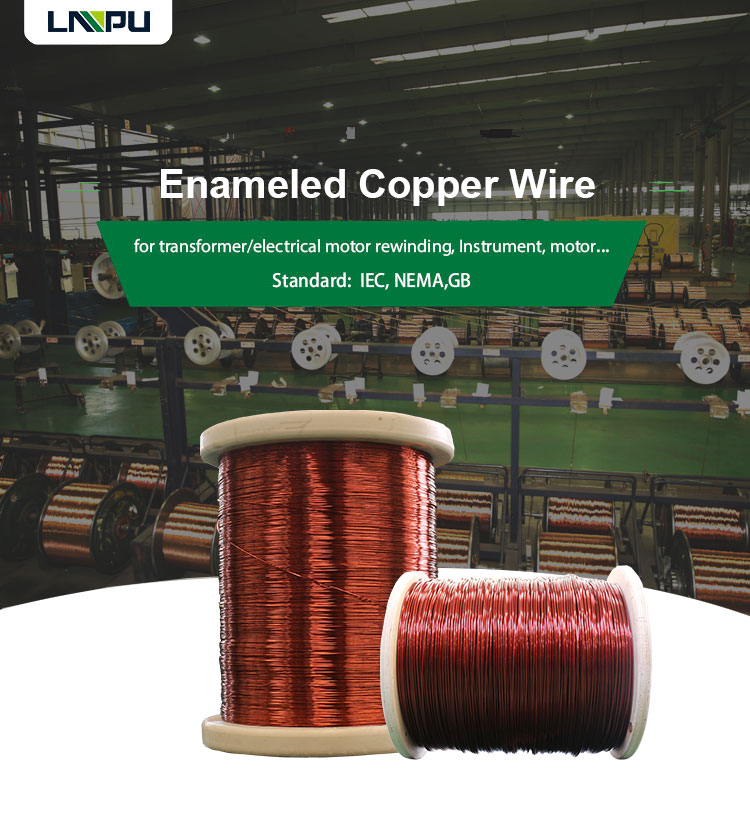
Copper winding line is also commonly referred to in the industry as electromagnetic wire, is a high-purity copper as a conductor, covered with an insulating coating on the outer layer of the special wire, the core classification based on the type of insulation and wire cross-section shape.
As the core material of electrical equipment winding, it is mainly used to make coils, winding structure, to realize the mutual conversion of electric energy and magnetic energy, is a motor, transformer, generator, inductor coil and other equipment necessary components.
Mainstream copper winding wire is mainly divided into three categories: enameled wire, self-adhesive wire and high-frequency Litz wire, of which enameled copper winding wire has the widest application range and the largest market demand. Wire cross-section is routinely divided into round, flat, square three, can be adapted to different equipment winding processing needs.
The main classification of copper enameled winding wire
Enameled copper winding wire is categorized in two main ways, one is according to the cross-section of the wire shape, the second is according to the outer layer of insulation enamel coating material division, the two classifications correspond to different processing scenarios and performance requirements, the following one by one to explain in detail.
Types of Enameled Copper Winding Wire Based on Shape
Enameled round copper winding wire
Copper itself has strong ductility, after professional wire drawing process, it can be processed into different diameters of round wire, and it is also the most widely used type of enameled copper winding wire in the market.
The diameter of the wire directly determines the current-carrying capacity, the smaller the diameter of the wire current-carrying capacity of the weaker, more for headphones, charging cables, small electronic components and other precision products; the larger the diameter of the wire current-carrying capacity of the stronger, suitable for transformers, large motors, industrial electrical equipment, and other high-power scenarios.
At present, the standardized production of enameled round copper winding wire in the industry can cover a diameter range of 0.016mm to 7.0mm, which can meet the needs of micro-precision electronics to large-scale industrial equipment in the whole scene.
Enameled Flat (Rectangular) Copper Winding Wire
Enameled flat copper winding wire is a rectangular cross-section winding wire made of copper through a special calendering process, which has a higher space utilization rate and a larger winding fill factor than round wire.
This type of wire is designed for compact, high-performance electrical equipment to create a limited space to achieve higher power, more stable power conversion, the core application of new energy vehicles drive motors, electric vehicle powertrain, high-density transformers, special industrial motors and other scenarios.
In the rapid development of the new energy industry, the market demand for enameled flat copper winding wire continues to climb, becoming the preferred winding material for high-end electrical equipment.
Types of Enameled Copper Winding Wire Based on Enamel Used
Insulation coating is the core of enameled copper winding wire, which directly determines the heat resistance, electrical properties, mechanical strength and chemical corrosion resistance of the wire. Different coating materials correspond to different temperature levels and applicable scenarios, the following is the industry’s mainstream coating types.
Polyester coated copper winding wire (PE)
Polyester coated enameled wire is a highly versatile basic electromagnetic wire with stable electrical properties, good heat resistance and solvent resistance, outstanding cost performance, and is suitable for use in conventional electrical equipment.
The heat-resistant index of this type of wire is divided into 130℃ and 155℃ (Class B), the disadvantage is that the resistance to thermal shock performance is general, hydrolysis degradation resistance is weak, and it needs to be well protected when it is used in sealed electrical equipment.
Polyester enameled wire is mainly divided into two categories: PEW polyester enameled copper wire and NY-PEW nylon composite polyester enameled copper wire. The latter has a new nylon coating, higher surface smoothness, improved thermal shock resistance, heat-resistant index of 155 ℃ (F class), suitable for high-speed automated winding processing, and is mostly used in the field of conventional motors and household appliances.
Hermetic enameled copper winding wire
Hermetic enameled copper wire adopts high-performance composite insulating coating, with stronger heat resistance, mechanical strength and corrosion resistance, suitable for electrical equipment under severe working conditions, and is the mainstream choice for medium and high-end equipment.
AIW Enameled Copper Wire
AIW enameled copper wire is coated with polyamideimide, with a heat resistance index of 220°C-240°C (Class M), making it a high-quality sealing-type enameled wire with both heat resistance and mechanical properties. Its mechanical strength is outstanding and it can withstand strong external impacts and is not prone to breakage of the insulation layer.
With excellent overload capacity and heat resistance, the wire is suitable for a variety of mid-range and high-end scenarios, mainly used in automotive electrical systems, large industrial motors, and high-end household appliances, etc., and can meet the demand for stable operation under severe working conditions.
EIW Enameled Copper Wire
EIW enameled copper wire is coated with polyesterimide, with a heat resistance index of 180°C (Class H), and its core advantage is its balanced overall performance, combining excellent thermal shock resistance, hydrolysis degradation resistance and refrigerant resistance.
It has a wide range of adaptability and can cope with a variety of complex environments without additional protection, and is commonly used in automotive electrics, industrial fans, power transformers, and various types of industrial motors, with outstanding cost performance.
NY-EIW Enameled Copper Wire
NY-EIW enameled copper wire is an upgraded version of EIW enameled wire, with a new nylon outer layer on top of the polyesterimide coating. The most important feature is that the smoothness of the surface has been greatly improved, and it can be adapted to high-speed automated winding processing.
Its heat resistance index is maintained at 180°C (Class H), inheriting the core performance of EIW wire, which is widely used in all kinds of electric motors, household appliances and automotive electrics, and can effectively improve the efficiency of winding processing.
EIW-AIW Enameled Copper Wire
EIW-AIW enameled copper wire is coated with polyesterimide + polyamideimide double-layer composite coating, with heat resistance index up to 200℃-220℃ (H+ grade/K grade), and strong hydrolysis and refrigerant resistance, which is suitable for extreme working conditions.
As a high-end sealing type wire, its mechanical strength and stability pull full, mainly used in refrigeration and air conditioning, rail transportation equipment, special equipment for national defense and industrial pump body and other high-end scenes, to protect the equipment long-term stable operation.
Corona Resistant Enameled Copper Wire
Corona-resistant enameled copper wire adopts a special composite coating, adding special nano-materials to the polyesterimide and polyamideimide coatings, the core function of which is to resist corona discharge damage caused by surge voltage.
It can effectively avoid breakdown of the insulation layer aging and extend the service life of the equipment, which is specifically used for high-voltage transformers, new energy vehicle drive motors and inverter drive motors and other high-voltage, high-frequency equipment.
Self-bonding enameled copper winding wire
Self-adhesive enameled copper wire has a special self-adhesive coating on the outer layer. After the winding process is completed, there is no need for dipping and curing, and the coil can be shaped by heating or solvent, which greatly simplifies the production process and improves the processing efficiency.
Methanol and ethanol can be used to assist the bonding process during the wire shaping process, resulting in minimal thermal deformation of the coil and a solid structure after shaping, making it suitable for high-precision coil winding production.
Mainstream models include SB-EIW, SB-EIW-AIW, SB-UEW, SB-PUPEI, with heat-resistant indexes ranging from 130℃ to 220℃, which are suitable for different scenarios such as automotive electrics, home appliances, industrial motors, switchgear, etc., and can meet diversified needs for paint-free processing.
Poly Vinyl based Enameled Copper Winding Wires
This type of wire is coated with polyvinyl acetal, with high mechanical strength, excellent flexibility, stable hydrolysis resistance and thermal shock resistance, and is the mainstream choice for transformer winding wire.
Poly Vinyl based Copper Winding Wire mainly has two kinds of PVA and PVF, of which PVA enameled copper wire coated with polyvinyl acetal, heat-resistant index of 120 ℃ (Class A), the coating toughness, stable mechanical properties, designed for distribution transformers to create; PVF enameled copper wire coated with polyvinyl alcohol formaldehyde, heat-resistant index of 105 ℃ (Class A), performance and PVA wire is similar to the performance but cost-effective, widely used in conventional transformer windings. Widely used in conventional transformer winding.
Self Solderable or Polyurethane based copper winding wires
The biggest advantage of straight welding enameled wire is that it can be welded directly without stripping the insulating coating, eliminating the need for paint stripping, which greatly improves the production and assembly efficiency of electronic components, and it is the wire that is just needed in the electrical and electronic industry.
UEW (polyurethane-based) enameled copper winding wire is divided into several models, which differ from each other in terms of coating material, performance and application scenarios: UEW direct-soldered enameled wire adopts a single polyurethane coating with excellent high-frequency electrical performance and a heat-resistant index of 130°C-180°C (Class B), which is suitable for automotive electrics, home appliances and other conventional scenarios; NY-UEW enameled copper wire adds a nylon outer layer on top of the polyurethane coating, which provides a smoother surface and makes it suitable for automation. The surface is smoother and suitable for automated winding, the heat resistance index is the same as UEW, but it is more suitable for mass production; while PUPEI and NY-PUPEI direct welding enameled wires are coated with weldable polyesterimide coating, with stronger high-frequency performance than the previous two, and the heat resistance index is raised to 180℃ (Class H), among which NY-PUPEI with new nylon layer is better suited for high-speed winding, and it is used in high end fields such as switchgear, national defense equipment, etc., which is different from the previous two conventional wires. The new nylon layer of NY-PUPEI is more suitable for high-speed windings, which is used in switchgear, defense equipment, and other high-end fields.
Self-lubricating enameled copper winding wire
Self-lubricating enameled wire has a special self-lubricating coating on the outer layer, which has lower friction coefficient and stronger scratch resistance, and completely solves the problem of wear and scratch of the insulation layer in the process of high-speed winding.
SL-EIW-AIW self-lubricating enameled wire, using polyesterimide + polyamideimide + self-lubricating three-layer composite structure, smooth surface, mechanical strength of the full, high winding filling factor, heat resistance index of 200 ℃ (H + / K level), suitable for automobiles, home appliances, industrial motors, rail transportation, national defense and other high-end equipment throughout the scene.
How to Choose the Right Copper Winding Wire
Improper selection will directly lead to equipment failure, accelerated aging of the insulation layer, shorten the service life, and even lead to safety hazards. If you want to select the appropriate enameled copper winding wire, you need to focus on the following four core elements.
Wire gauge
Wire gauge directly determines the current-carrying capacity of the wire, the first step in the selection of equipment to match the operating current, to avoid overloading the wire heat.
Selection, wire current-carrying capacity than the actual maximum operating current of the equipment needs to be higher than 25%, leaving enough safety margin to ensure that a long period of full-load operation does not heat, not aging.
At the same time, combined with the winding space, processing technology, choose round or flat wire, taking into account the space utilization and winding processing feasibility.
Temperature Rating
Temperature rating is the core parameter of enameled wire, the rated heat-resistant temperature of the wire must be higher than the actual operating temperature of the equipment.
Conventional home appliances, small motors can choose 130 ℃ -155 ℃ heat-resistant grade; industrial motors, new energy vehicle equipment, it is recommended to choose more than 180 ℃ heat-resistant grade; harsh conditions, high-temperature environments, must be used in 200 ℃ – 240 ℃ ultra-high-temperature wire.
Enamel Type
Insulation enamel type coating determines the wire electrical, mechanical, chemical three core performance, need to be combined with the precise selection of the working conditions of the equipment.
The pursuit of straight welding efficiency, mass production processing, priority selection of polyurethane welding coating; conventional general-purpose equipment, selection of polyester coating can be; high temperature, high pressure, corrosion-resistant scenes, priority selection of polyesterimide, polyamideimide composite coatings; frequency conversion, high-voltage equipment, corona-resistant special coatings must be selected.
For high-speed automated winding processing, nylon composite and self-lubricating wires are preferred to improve processing efficiency and protect the insulation layer.
Standard
Procurement of enameled copper winding wire must comply with the corresponding industry standards to ensure product quality and safety, and at the same time to meet the export, bidding and other compliance requirements.
At the same time, in conjunction with the use of equipment environment, pay attention to hydrolysis resistance, refrigerant resistance, aging resistance and other special properties, all-round matching equipment operation needs.
Standards and Certifications of Enameled Copper Winding Wire
Enameled copper winding wire belongs to the mandatory standard electrical materials, the world’s mainstream countries and regions have developed strict production and testing standards to regulate the performance and quality of wire.
Core international standards
IEC 60317 series: the International Electrotechnical Commission formulated the global standard, subdivided into round wire, flat wire, different coated wire special requirements, is the industry’s most authoritative international standards.
IEC 60317-0-1 for enameled round copper wire general requirements, IEC 60317-0-2 for enameled flat copper wire general requirements, while subdivided into different heat-resistant grade, coating materials, special standard provisions.
IEC 60851: special testing standards for winding wire, specifying the testing methods for core indexes such as flexibility, adhesion, thermal shock and dielectric strength.
Regional and Manufacturer Standards
NEMA MW 1000: American Electrical Manufacturers Association standard, is the mainstream implementation of the North American enameled wire standard, terminology, testing requirements and IEC standards are slightly different; JIS C 3202: Japanese industrial standard, suitable for the production of Japanese local electrical equipment; GB 6109: China’s national standard, standardize the domestic production of copper-enameled winding wire and quality inspection.
Core Certification and Testing Programs
UL 1446 certification: North American market access core safety certification, for wire heat resistance level, insulation performance for stringent testing, certification covers 130 ℃ -220 ℃ + full heat range; RoHS, REACH certification: environmental compliance certification, to ensure that the wire does not contain lead, mercury, cadmium and other hazardous substances, to meet the global environmental requirements.
Conventional quality inspection programs include heat resistance level testing, dielectric strength testing, flexibility and adhesion testing, pinhole testing, etc., all-round protection of the integrity of the insulation layer and the use of wire safety. At the same time, the thickness of the insulation coating is divided into level 1 thin coating, level 2 thick coating, level 3 ultra-thick coating, which can be flexibly selected according to the voltage requirements of the equipment.
Common Applications of Enameled Copper Winding Wire
With excellent comprehensive performance, enameled copper winding wire has become a common core material in the electrical industry, covering the whole field of household appliances, industrial manufacturing, new energy, rail transportation, national defense and military industry, etc. The following are the core application scenarios.
Electric motor
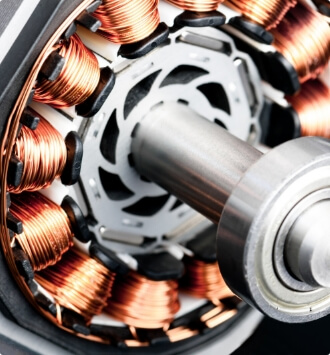
From small household fans, refrigerators, air conditioning compressor motors, to large industrial fans, pumps, heavy machinery motors, are inseparable from the enameled copper winding wire.
The excellent conductivity and heat dissipation of copper can effectively reduce the energy consumption of the motor, improve the operating efficiency, adapt to different power and speed of the motor winding requirements, to ensure the long-term stable operation of the motor.
Transformer
Transformer is the core equipment of power transmission and distribution system, enameled copper winding line has become the preferred material for transformer winding by virtue of low loss and high conductivity.
It can minimize power transmission loss, improve the conversion efficiency of the transformer, suitable for distribution transformers, power transformers, special transformers and other types of products.
Inductors and Chokes
Inductors and chokes in all kinds of electronic circuits are made of enameled copper winding wire, relying on stable electromagnetic conversion performance to achieve current control, magnetic field generation, circuit filtering and other functions.
Wire low resistance, high conductivity characteristics, can guarantee the stability of the electronic circuit operation, smooth signal transmission.
Generators and special equipment
Civil, industrial, vehicle generator armature winding, the core material are enameled copper winding wire, efficient realization of the mutual conversion of mechanical energy and electrical energy, to avoid the accumulation of heat during operation.
In addition, submersible pumps, speakers, relays, inductive sensors, new energy vehicle powertrain and other equipment, are also indispensable to high-performance enameled copper winding wire, is the lifeblood of modern industry and electrical equipment.
Conclusion
Enameled copper winding wire may seem inconspicuous, but the core components of the stable operation of electrical equipment, wire quality, specifications, performance directly determine the service life of the equipment and operational safety.
Whether it is purchasing and selecting, production and processing or technical research and development, it is necessary to accurately grasp the characteristics, standards and application scenarios of different types of enameled copper winding wire. Combined with the working conditions of the equipment, processing technology, and compliance requirements, selecting the right wire, selecting the right wire, in order to improve the quality of the product, reduce the risk of failure, and achieve long-term stable operation.