In the field of electrical and electronic engineering, the selection of winding wire directly determines the performance, operational efficiency and service life of the equipment. For a long time, the traditional round winding wire dominates the market; and flat winding wire, with its unique rectangular cross-section structure, is rapidly becoming the core material for high-end manufacturing and precision equipment.
From new energy vehicles, medical instruments, to photovoltaic power plants, aerospace, flat winding wire with high space utilization, excellent heat dissipation, stable electrical performance and other outstanding advantages, reshaping the modern electrical system design standards. This article from the definition, core advantages, material classification, conductive principle, typical applications and comparison with round wire and other dimensions, systematic dismantling of flat winding wire, for industry selection and engineering applications to provide professional reference.
Flat winding wire
Flat winding wire is a rectangular cross-section of the special electrical wire, and the traditional round wire round cross-section to form a sharp difference. Its flat and wide shape is not just a change of form, but a core structure designed for space-constrained applications with high performance requirements.
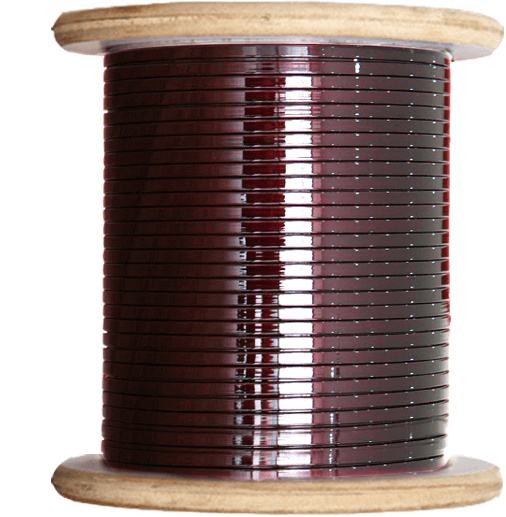
Flat winding wire has a wide selection of base materials, with copper being the most mainstream, combining excellent electrical conductivity and cost control, which can meet the basic needs of most electrical equipment. According to the special requirements of the scene, aluminum, stainless steel, silver, etc. can also be used as a conductor material:
Aluminum flat wire is lightweight and corrosion-resistant, suitable for lightweight demand scenarios;
Stainless steel flat wires are strong and wear-resistant, and are suitable for construction, medical and other fields that require high structural strength;
Silver flat wire has excellent electrical conductivity, mostly used in ultra-high precision instruments and equipments.
Core Advantages of Flat Winding Wire
Flat winding wire can be rapidly promoted in many fields, the core from its five core advantages, these qualities accurately solve the pain points of the traditional round wire in modern applications, become the key reason for its irreplaceable.
Higher operational reliability
Flat winding line adopts the structure of conductor parallel connection, which reduces the risk of failure of welding and wiring from the source. Traditional round wire is prone to problems such as false welding, leakage of welding, and messy wiring leading to poor contact; the parallel structure of the flat wire makes the conductor layout regular, significantly reduces the probability of short-circuit, poor contact and other failures, and ensures the long-term stable operation of the equipment.
Stronger adaptability to dynamic working conditions
High flexibility is the core competitiveness of flat winding wire, especially suitable for frequent movement, repeated bending of dynamic equipment, such as industrial robotic arms, automated medical diagnostic equipment, CNC machine tool axis control system.
Its bending cycle life can reach 15 million times, much higher than the traditional round wire; long-term repeated bending, the internal conductor is not easy to break, deformation, for dynamic equipment to provide a durable and reliable electrical connection.
Maximize space utilization
Under the trend of miniaturization and high density of modern electrical equipment, space resources are especially precious. The space advantage of flat winding wire is extremely prominent, compared with the same conductivity of the round wire, it can save 10-30% of the installation space.
This advantage is due to its structural design: flat winding wire eliminates the need for additional insulation, filler and tapes, which significantly reduces the overall size and weight. In transformers, inductors and other winding equipment, flat winding wire can be arranged in close proximity and stacked on top of each other, making full use of the limited space, allowing for a more compact design of the equipment and reserving more space for other functional modules.
Highly Stable Electrical Performance
The conductor spacing and geometry of flat winding wire are fixed, resulting in a high degree of consistency in electrical performance. Key parameters such as capacitance, delay, attenuation, impedance, crosstalk, inductance, etc., do not fluctuate significantly throughout the entire wire, whereas round wires are prone to deviations in conductor arrangement due to the rounded cross-section, resulting in unstable electrical parameters.
This stability is especially important in high-frequency, high-current scenarios, which can effectively avoid signal distortion, energy loss, and ensure the accurate operation of equipment in complex electrical environments, especially suitable for precision electronic equipment, high-frequency communication equipment and other fields with extremely high requirements for electrical performance.
Easy and efficient installation and maintenance
Flat shape can be flexibly bent to fit the contour of the installation area, fixed in various ways (clamps, glue, double-sided tape can be used), without the need for complex tying process, to solve the problem of cumbersome round wire wiring, difficult to install.
At the same time, the conductor position is clearly fixed, which is convenient for quick wire recognition, troubleshooting and overhauling against the drawings, significantly shortening the installation and operation and maintenance time, and reducing the overall cost.
The main material classification of flat winding wire
Flat winding wire is not a single material, different materials of flat wire with unique performance, suitable for different industries and application needs. The following are the characteristics and application scenarios of the three mainstream materials to help accurately match the selection needs.
Copper flat winding wire is the most widely used category, occupying the core share of the flat wire market. Copper has excellent electrical conductivity, good ductility, easy processing, and can be accurately made into a rectangular cross-section that meets the dimensional requirements.
In the field of electronic components, such as transformers, inductors, relays, etc., copper flat wire has become the preferred material due to its low resistance and high conductive efficiency. In new energy vehicles and high-power electrical appliances, copper flat wires can carry large currents and reduce energy loss, while its good heat dissipation can avoid overheating problems under high-current operation, making it an ideal choice for both performance and cost.
Aluminum flat winding wire is an important material for automotive and aerospace applications because of its core advantages of light weight and corrosion resistance. The density of aluminum is only one-third of that of copper, so the weight of flat wire made of aluminum is greatly reduced, which can effectively reduce the overall weight of the equipment, in line with the trend of lightweight design of new energy vehicles and aerospace equipment.
At the same time, aluminum surface is easy to form a dense oxide film, with excellent corrosion resistance, suitable for outdoor, marine and other harsh environments. Although the conductivity of aluminum is slightly lower than copper, but through the optimization of the cross-section size, can meet the needs of most of the low and medium-current scenarios, and the cost is relatively low compared to copper, becoming a very cost-effective alternative material.
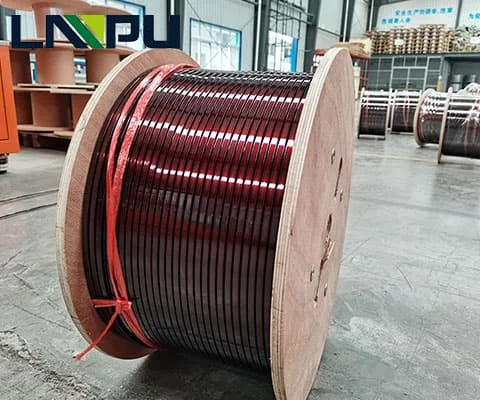
Stainless Steel Flat Winding Wire
Stainless steel flat winding wire focuses on high strength and durability, and is mainly used in areas with strict requirements for structural strength and environmental adaptability. Stainless steel material has excellent tensile, corrosion and high temperature resistance properties, which is outstanding in the scenarios of structural reinforcement of buildings, precision parts of medical equipment, military equipment and other scenarios.
In medical equipment, the biocompatibility and stability of stainless steel flat wire guarantees the long-term accurate operation of CT machines, MRI machines and other equipment; in the military field, it can adapt to the extreme environment of high temperature, high pressure and strong corrosion, and provide reliable support for the electrical system of weapons and equipment. Although its conductivity is weak, but for the special needs of low-current, high-intensity, can still play an irreplaceable role.
Conductive principle
The core function of all wires is to conduct current, flat winding line and the essential difference between the round wire, lies in the way the electron flow, this difference directly solves the skin effect of the round wire pain, become the core technical support of its performance advantages.
The disadvantages of the skin effect of round wires
Round wire will generate a magnetic field when energized, under the action of the magnetic field, electrons are forced to flow along the surface of the wire, that is, the skin effect. The current is concentrated in the wire “skin”, the center conductor is almost not involved in the conductive, resulting in a waste of materials; at the same time, the resistance rises, heat intensification, long-term operation to accelerate the aging of the insulation layer, reducing the life of the equipment and pose a potential safety hazard.
Conducting Mechanism of Flat Winding Wire without Skin Effect
In advanced communication equipment and new energy power generation systems, flat winding wire excels in maintaining signal integrity and reducing electromagnetic distortion. Its superior conduction efficiency and low-loss characteristics improve energy conversion and transmission performance, contributing to greater overall system reliability and power density. These advantages make flat winding technology an ideal solution for next-generation high-efficiency power electronics and intelligent energy systems.
Practical application scenarios of flat winding wire
The advantages of flat winding wire have covered a number of core industries, and its application is not only limited to the industrial field, but also deeper into the daily life and high-end equipment. The following five scenarios visualize the actual value and market potential of flat winding wire.
Automotive wiring harness
With the popularization of new energy vehicles, the design of automotive wiring harnesses is facing the triple challenges of light weight, high current and compactness, and flat winding wire has become the core solution. Its space-saving characteristics allow the harness to be flexibly arranged in the limited body space of the car, reducing the volume and weight of the harness, and reducing the weight by 15%-20% compared with the traditional round harness, effectively enhancing the car’s range.
In the battery pack and motor control system of new energy vehicles, flat winding wires can carry large currents, while avoiding overheating problems through excellent heat dissipation performance. At present, the mainstream new energy vehicle brands have flat winding wire into the wiring harness design system, becoming the standard material for high-end models.
Consumer electronics
Smart phones, tablet PCs, smart wearable devices and other consumer electronics products, is toward the development of thin and light, portable direction, flat winding wire to provide key technical support. Its flat cross-section can be embedded in the tiny space inside the device to support the thin and light design of the product, while the repeated bending characteristics extend the service life of the connecting wires inside the device.
In folding screen phones and smartwatches, flat winding wires are used for the connection of the screen, battery, and sensors, which can adapt to the folding and rotating action of the device and ensure stable signal transmission. Industry data shows that the demand for flat winding wire in the field of consumer electronics is rapidly rising at an annual growth rate of 25%, becoming an important driver of industry growth.
Renewable energy systems
In solar photovoltaic power stations, wind power stations and other renewable energy systems, the application of flat winding wire directly affects the power generation efficiency and system life. Its high conductivity and low heat characteristics, can reduce the loss of power transmission process, enhance the energy conversion efficiency, compared with the traditional round wire, power generation efficiency can be increased by 10% -15%.
At the same time, the compact structure of flat winding wire is suitable for the complex layout of photovoltaic panels and wind turbines, which simplifies the wiring process and reduces construction costs. In large-scale photovoltaic power stations and offshore wind power stations, the corrosion and aging resistance of flat winding wire also ensures the long-term stable operation of the system in harsh outdoor environments and prolongs the service life of the equipment.
Aerospace and defense equipment for harsh environments
Aerospace and defense equipment have extremely stringent requirements for electrical systems, which need to meet the standards of lightweight, high strength, high reliability, and resistance to extreme environments, and flat winding wire fits these requirements perfectly. In aircraft, satellites, missiles and other equipment, its lightweight design can reduce the overall load, enhance the flight performance and endurance of the equipment.
At the same time, the flat winding wire made of stainless steel and aluminum can adapt to the extreme environment of high altitude, high temperature and strong vibration to avoid electrical failure. Flat winding wire market in the aerospace field is growing at a compound annual growth rate of 8%, becoming a key supporting material for high-end equipment manufacturing.
Flat winding wire vs round winding wire: core dimension comparison
The two types of wires have their own application scenarios, there is no absolute advantage or disadvantage, there are only differences in the degree of matching, specifically from the seven core dimensions of the comparison. In terms of space utilization, flat wire advantage is significant, under the same conditions can save 10% -30% of the installation space, more suitable for equipment high-density, miniaturized design needs, while the round wire occupies a larger space, it is difficult to meet the requirements of the space layout of the precision equipment; heat dissipation performance, the flat wire has a larger surface area, more efficient heat dissipation, while the round wire is affected by the effect of the skin effect, it is easy to generate heat buildup during operation. Heat accumulation during operation. Electrical stability, flat wire conductor spacing and geometry is fixed, capacitance, impedance and other key electrical parameters throughout to maintain excellent consistency in high-frequency, high-current scenarios, outstanding performance, round wire due to the cross-sectional form of the limitations of the conductor layout is prone to deviation, resulting in unstable electrical parameters, high-frequency scenarios are prone to signal distortion.
Installation and maintenance level, flat wire can be flexibly bent to fit the installation area, fixed in a variety of ways and do not need complex tying, the conductor position is clear, easy to recognize the line, troubleshooting and maintenance, greatly improving efficiency, round wire is cumbersome wiring, maintenance is difficult. Processing costs, flat line manufacturing process is more complex, the initial equipment investment is higher, need special processing equipment, round line is a mature process, low cost and adequate supply, more versatile. In terms of flexibility and strength, flat wire bending performance is excellent, more suitable for industrial robots and other dynamic conditions, but the tensile strength is slightly lower, round wire is higher tensile strength, versatility, more suitable for conventional static scenes. Terminal connection, flat wire with special fixtures, connection process is relatively complex, round wire connector is universal and high degree of standardization, connection operation is more simple.
Selection Guide for Flat Winding Wire
Selection is a key link in the application of flat winding wire, combined with equipment requirements, use of the environment, performance indicators to make a comprehensive judgment, the following four-step process can help quickly lock the appropriate flat winding wire.
clear core material requirements
When choosing the core conductor material of the flat winding line, need to be combined with the scene needs to be accurately matched, high-current, high-precision scenes give priority to the selection of copper flat line, lightweight, outdoor corrosion-resistant scenes can choose aluminum flat line, and high-strength, extreme environments and low-current scenes are suitable for the selection of stainless steel flat line, and at the same time, need to confirm that the selected material meets the requirements of the corresponding industry certificates, such as the medical field needs to meet the biocompatibility certification. Automotive field needs to meet the UL certification, aviation field to meet the MILSTD standard.
Determine the cross-section size accurately
The thickness and width of flat winding wire directly determine its current-carrying capacity and spatial adaptability. According to the rated current of the equipment, the size of the installation space, calculate the required cross-sectional area of the conductor. For high-current scenarios, choose thick and wide flat wires, and for small-current and miniaturized equipment, choose thin and narrow flat wires.
It is recommended to communicate with the supplier to determine the optimal size through professional calculation tools to balance the current-carrying capacity and space occupation, to avoid inadequate performance or waste of space due to improper size.
Match the flexibility and strength requirements
If it is used for robots, medical equipment and other dynamic conditions that require frequent movement, the selection of flat winding line should focus on its bending cycle life, and prioritize the selection of flexible models, so as to adapt to the long-term repeated bending of the use of the demand, to avoid the conductor breakage affecting the operation of the equipment.
For large transformers, building structures such as static and bear large loads of equipment, flat wire tensile strength is particularly important, can be optimized by optimizing the cross-section thickness of the way, to further enhance its durability, to ensure long-term stable service.
Evaluate the environment and special requirements
In the assessment of the environment and special requirements, outdoor and marine environments need to give priority to the use of aluminum, stainless steel and other corrosion-resistant materials, high-temperature environments should be matched with high-temperature insulation layer of the flat wire, medical equipment scenes need to focus on confirming the biological safety of the flat wire, and military and aerospace fields require the flat wire to meet the vibration resistance, radiation and other special indicators.
At the same time, the insulating layer material should be strictly checked to ensure that it is suitable for the working temperature and voltage resistance level, so as to avoid safety accidents caused by aging and damage of the insulation.