In modern electrical, electronic, and new energy industries, enameled copper wire serves as a foundational component, leveraging superior electrical conductivity, insulation integrity, and thermal endurance for applications in motors, transformers, electronic components, and beyond.
Enameled copper wire is a specialty wire made of a heat-resistant, insulating, durable polymer enamel layer evenly coated on the surface of a high-purity copper conductor. Its core structure consists of two parts: the “copper conductor” and the “enamel insulation layer”, which work in synergy to combine conductive efficiency and insulation safety.
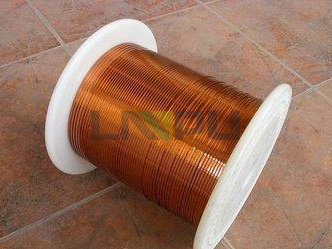
From the appearance of most of the enameled copper wire shows a metallic luster similar to bare copper, the naked eye is difficult to distinguish its surface of the ultra-thin enamel layer, which is also the most intuitive difference between it and the traditional PVC-insulated copper wire – the latter’s insulation layer is thick and colorful, while the enameled copper wire insulation layer is only a few microns thick, almost does not affect the overall size of the wire.
Compared with ordinary bare copper wire, PVC insulated copper wire, enameled copper wire in the insulation performance, temperature rating, winding flexibility has irreplaceable advantages, especially suitable for space utilization and performance stability requirements of high-end electrical equipment.
Enamel insulation layer of copper enameled wire
Enamel insulation layer is the “soul” of enameled copper wire, which directly determines the temperature resistance level, insulation performance and mechanical strength of the product. Different materials of the enamel layer, suitable for application scenarios vary greatly, common materials are divided into four categories, while there is also a clear insulation level division, to facilitate the user according to the needs of the selection.
1. Polyurethane enameled wire (UEW)
The core advantage of polyurethane enameled wire lies in the strong weldability, no need to peel off the insulation layer can be directly welded, which greatly enhances the production efficiency of precision electronic components. It is extremely flexible, with a thin and easy-to-peel insulating layer, a stable temperature resistance range of 130℃-155℃, and the ability to adapt to slight mechanical bending without breakage.
Due to its fine characteristics, polyurethane enameled wire is mainly used in various types of precision electronic components, such as small relays, sensors, headphone coils, miniature transformers and so on. This kind of scenario requires very high wire diameter, winding precision, ultra-thin insulation layer and excellent solderability of polyurethane enameled wire.
2. Polyester Enameled Wire (PEW)
Polyester enameled wire is the most widely used and cost-effective class of enameled copper wire. It has excellent mechanical strength, stable insulating properties, good moisture resistance, long-term temperature resistance of about 130 ℃, can adapt to the routine working environment of daily electrical equipment, and is not easy to fall off the insulation layer, breakage of the situation.
It is suitable for common household electrical and small electrical equipment, such as electric fans, washing machine motors, small transformers, low-voltage electrical coils and so on. This kind of equipment has moderate performance requirements and focuses on cost control. Polyester enameled wire has become the first choice for this kind of scenario because of its combination of “cost-effective + stability”.
3. Polyester Imide Enameled Wire (EIW/EIWH)
Polyesterimide enameled wire belongs to the middle and high end type, the biggest advantage is the outstanding high temperature resistance, long-term temperature resistance can reach 180℃ and above, at the same time, it has good abrasion resistance, chemical corrosion resistance, and the mechanical strength is far more than polyester enameled wire, which is able to adapt to more complex and more demanding working environment.
Its adaptable scene is mainly concentrated in the high-end motors, power transformers, automotive electronic components, etc., such equipment will produce high heat when working, the wire temperature resistance and mechanical strength requirements are strict. Polyesterimide enameled wire can effectively resist high-temperature aging and extend the service life of the equipment.
4. polyimide enameled wire (AIW)
Polyimide enameled wire is a class of enameled copper wire with optimal high temperature resistance, long-term temperature resistance of up to 220 ℃ or more, as well as extremely strong resistance to radiation, chemical corrosion resistance, stable insulation properties, even in extremely harsh environments, but also to maintain a good working condition.
Due to its excellent performance, it is mainly used in aerospace equipment, new energy vehicle drive motors, industrial high-frequency inverters and other high-end harsh scenes. These scenarios require very high performance of the wire, polyimide enameled wire “extreme temperature resistance + corrosion resistance” characteristics, to meet all kinds of special needs.
In addition to material classification, enameled copper wire can also be divided into three grades according to the thickness of the insulation layer, suitable for different load scenarios, to further facilitate user selection:
Grade 1 (Thin Insulation): Thinner insulation layer, lower cost, applicable to general-purpose scenarios, such as small toy motors, ordinary electronic toys in the wire.
Grade 2 (medium insulation): insulation layer thickness is moderate, balanced performance and cost, suitable for standard electrical equipment, such as household air conditioning motors, ordinary transformers.
Grade 3 (thick insulation): thicker insulation layer, anti-wear, anti-impact ability, suitable for heavy industrial equipment, such as large industrial motors, high-voltage transformers.
The production process of enameled copper wire
The production of enameled copper wire is a precision project, need to go through a number of strict procedures, the core is to ensure the purity of the copper conductor and the uniformity of the enamel layer, adhesion, the control of the parameters of each process, are directly affecting the final performance of the product, the whole process can be controlled and traceable.
Core production process
- Annealing process: Bare copper wire will be cold deformed after drawing, resulting in changes in grain structure and stiffness and breakage. The annealing process softens the copper wire through heating in a protective atmosphere, avoiding surface oxidation and providing a good base for the subsequent attachment of the enamel layer.
- Enamel coating: as the core process of enameled copper wire production, it is mainly divided into two ways: felt coating and mold coating. Felt coating is suitable for fine specification enameled wires, while mold coating is suitable for coarse specification enameled wires.
Coating is done in multiple thin layers (instead of a few thick layers), which ensures a uniform and dense insulating layer and improves its mechanical properties and insulating effect. After each coating layer, a preliminary bake is carried out to ensure that the insulation layer is firmly attached.
- Curing and baking: After coating, the copper wire enters a high-temperature oven for curing, the core of which is to remove the solvents in the enamel layer (through catalytic combustion to achieve environmentally friendly emissions), so that the enamel layer is cured into shape to form a dense insulating barrier.
- Lubrication treatment: after curing the surface of the insulation layer, quantitative and accurate application of lubricants, the core purpose is to enhance the performance of enameled copper wire winding, to ensure that the high winding speed without failure, good consistency of the winding, to avoid winding jams, wire breakage problems.
- Diameter Detection: Using laser to monitor the outer diameter of the finished enameled wire in real time to ensure that the specifications are in line with the standard. Thick insulation layer will increase the volume of wire, affecting the tight winding; too thin will reduce the insulation performance and increase the risk of short circuit, this process is an important part of product quality control.
- Tension control: The tension of the copper wire is precisely controlled throughout the production process to avoid abnormal resistance caused by the deformation of the copper wire, and to ensure the stability of the conductive properties.
- Winding and Packing: Accurately control the winding pitch and spool speed, and neatly wind the finished enameled wire to the spool.

Classification of enameled copper wire
Enameled copper wire is clearly categorized according to four core dimensions: insulation material, conductor shape, application scenarios, and temperature resistance level. Users can quickly select the right type according to their own usage scenarios, which reduces the selection cost and improves the stability of equipment operation.
1. Classification by insulation material
Classification by insulation material is the most commonly used selection method. Different materials of enameled copper wires have obvious performance differences and are suitable for different scenarios:
| Enamel Wire Types |
Core Temperature Resistance |
Characteristics |
Adapted scenarios |
| Polyimide (PI) enameled wire |
Above 200℃ |
Excellent radiation resistance and corrosion resistance |
Aerospace, new energy vehicle drive motors, high-frequency inverters |
| Polyester (PE) enameled wire |
130℃ |
High cost performance and stable insulation performance |
Common household appliance motors, small transformers, low-voltage coils |
| Polyurethane (PU) enameled wire |
– |
welded without peeling and has good flexibility. |
Precision electronic components such as relays, sensors, and miniature transformers |
| Polyesterimide (PEI) enameled wire |
155℃ |
High mechanical strength |
Mid-to-high-end motors, automotive electronics, power transformers |
| Polyimide (PAI) enameled wire |
Above 220℃ |
Outstanding high temperature resistance |
Aerospace equipment, industrial high-frequency inverters |
2. Categorized by conductor shape
Enameled copper wire is classified into two main types based on conductor cross-section: round and flat.
Round enameled wire features a circular cross-section and is the most widely used variant. Diameters range from 0.01 mm to several millimeters, making it ideal for motors, electronic components, household appliance coils (e.g., air conditioner compressors), and standard transformers.
Flat enameled wire has a rectangular or obovate cross-section, enabling tight winding, superior space utilization, and enhanced heat dissipation compared to round wire. It suits large motors, high-voltage transformers, reactors, and applications demanding optimal space and thermal performance.
3. Categorized by application scenarios
Motors: High thermal class, strength, insulation.
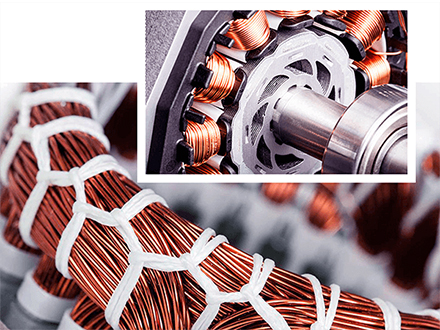
Electronics: Fine gauge, thin enamel, solderable (PU for relays, inductors, solenoids, micro-transformers).
Appliances: Cost-reliable (PE/PEI for fridge/AC/washer/fan motors).
Automotive: Temp/vibration/oil-resistant (PEI/PI for motors, sensors, controls).
Aerospace: Extreme heat/radiation/corrosion (PI/PAI for engines, spacecraft).
4. Categorized by temperature resistance grade
Temperature resistance class is the core performance index of enameled copper wire, which directly determines its working environment, and is mainly divided into four classes, corresponding to different insulation materials and application scenarios:
130℃ class (Class B): mainly PE enameled wire, suitable for low temperature, light load scenarios, such as ordinary household small motors, small toy motors and so on.
155℃ class (Class F): mainly PEI enameled wire, applicable to medium temperature scenarios, such as high-end motors, automotive electronics, general transformers, etc..
180℃ class (Class H): mainly modified PE/PEI enameled wire, with good high-temperature resistance, suitable for high-temperature scenarios, such as industrial motors, high-voltage transformers.
200℃ and above (Class C): mainly PI/PAI enameled wires, suitable for extreme high temperature and harsh environments, such as aerospace, new energy equipment, high-frequency inverters and so on.
Supplementary: some special models of enameled copper wire, can achieve long-term temperature resistance of 240 ℃ or more, to meet the needs of more extreme working conditions, suitable for high-end special equipment.
Application Scenarios of Enameled Copper Wire
Enameled copper wire as a core component of the modern electrical industry, the application of a wide range of scenarios, infiltration of daily life, industrial production, new energy, aerospace and other fields, wherever the need for motors, coils, transformers, equipment, almost all inseparable from the enameled copper wire figure.
The wide range of application scenarios stems from its core advantages of “efficient conductivity + ultra-thin insulation + stability”, which can be adapted to the performance requirements of different scenarios and provide a guarantee for the stable operation of various types of equipment.
1. Motor field
Electric motors are the most important application of copper enameled wire, whether it is industrial machinery, automotive systems, household appliances, HVAC systems, their internal motor coils need to use copper enameled wire. As the “winding core” of the motor, copper enameled wire is responsible for converting electrical energy into mechanical energy, and its performance directly determines the efficiency and service life of the motor.
In industrial machinery, enameled copper wire is used in pumps, conveyors, production line motors and other heavy equipment, which need to have high temperature and wear resistance; in the automotive system, it is used in starter motors, wiper motors, powertrain motors, etc., which need to have vibration resistance, high and low temperatures, and oil resistance; in the home appliances and HVAC systems, it is used in air conditioning compressors, washing machine motors, fan motors, etc., which need to have stability and cost-effective.
2. Transformer field
The core component of the transformer is the winding, and enameled copper wire is the preferred material for the winding. It can realize the efficient transmission of electric energy between different voltage levels, ensure the stability of power distribution and voltage regulation, and is widely used in power distribution, electrical equipment and other scenarios.
In the power distribution network, enameled copper wire is used in power transformers to realize voltage step-up (for long-distance transmission) and step-down (for domestic and industrial use); in voltage regulation equipment, it is used to stabilize the voltage output and protect sensitive electronic equipment; in small electronic transformers, it is used to realize the voltage conversion of circuits and ensure the normal operation of electronic equipment.
3. Generator field
The core material of the winding of the generator is also enameled copper wire, whether it is a large thermal power, hydropower, nuclear power generators, or small portable generators, all need to rely on enameled copper wire winding to cut the magnetic field, generating electric current, to achieve the production and distribution of electric energy.
The high conductivity and high temperature resistance of enameled copper wire can ensure the long-term stable operation of the generator under high load conditions and provide a continuous and reliable power supply. Especially for large generators, the temperature resistance and mechanical strength of enameled copper wires are highly required, and PEI, PI and other medium and high-end enameled copper wires are usually used.
4. Coils and Inductors
In electronic circuits, coils and inductors are indispensable components, mainly used for energy storage, signal filtering, signal processing, and copper enameled wire with ultra-thin insulation layer and good winding performance, become the core material of such components.
Because enameled copper wire can be tightly wound, it can be used to make compact coils and inductors that fit the design needs of small electronic devices. In power modules, for energy storage; in audio and video equipment, for filtering interfering signals; in communication circuits, sensor systems, for signal processing, to ensure the stability of signal transmission.
5. Communication equipment field
The normal operation of communication equipment cannot be separated from the support of enameled copper wire. It is mainly used in antennas, relays, communication cables and other components to ensure stable and reliable signal reception, transmission and conversion.
In the antenna, copper enameled wire is wound into a specific coil structure for receiving and transmitting radio signals to ensure clear communication; in the relay, copper enameled wire forms electromagnetic coils, which control the on and off of the contacts to realize the signal conversion and circuit control; in the communication cable, copper enameled wire serves as the core conductor, which reduces the signal loss and ensures the stability of wired communication.
6. Domestic Appliances
In household appliances, almost all motor-driven components need to use enameled copper wire. It is the core guarantee for the stable operation of home appliances, suitable for all kinds of household scenarios, focusing on cost-effectiveness and stability.
For example, the compressor motor of refrigerator, the fan motor of air conditioner, the drum motor of washing machine, the blade motor of fan, etc., all of them use enameled copper wire as the winding material.
7. New energy field
With the rapid development of new energy industry, enameled copper wire is more and more widely used in wind power, solar power generation and other fields. These scenes are mostly outdoor harsh environments, which require high temperature resistance and corrosion resistance of enameled copper wire.
In wind turbines, enameled copper wires are used in windings to convert wind energy into electricity; in solar panels, they are used in junction boxes and inverters to efficiently transmit the electricity generated by solar energy. Due to the existence of high temperature, rain, snow, sand and other factors in the outdoor environment, PI, PAI and other high-temperature resistant, corrosion-resistant enameled copper wire is usually used to ensure the long-term stable operation of the equipment.
The core advantages of enameled copper wire
Compared with ordinary bare copper wire and PVC/rubber insulated copper wire, enameled copper wire has become the preferred material for medium and high-end electrical equipment due to its unique performance advantages, taking into account the performance, efficiency and cost, and showing irreplaceable value in various scenarios.
High conductivity
Copper itself is an excellent conductive material, and enameled copper wire perfectly retains the high conductivity of copper, very low resistivity, can realize the efficient transmission of electricity, reduce power loss. This advantage is especially important in high-power equipment such as motors and transformers, which can reduce the energy consumption of equipment operation and economize the use of costs.
Compared with other conductive materials such as aluminum, copper conductivity is better, the same current-carrying capacity, enameled copper wire can be used in finer specifications, not only to save materials, but also to reduce the size of the wire, help equipment miniaturization design.
Excellent insulation
Enameled copper wire has a uniform and tight enamel insulation layer, which can effectively isolate the conductor, preventing short-circuiting between wires and between wires and other parts, and avoiding equipment failures and safety hazards. Especially in tight winding scenarios, the ultra-thin insulating layer of enameled copper wires ensures tight winding without compromising the insulating properties.
The strong adhesion of the enameled insulation layer is not easy to fall off and break even in the process of wire bending and winding, and the insulation performance is stable in long-term use, which can effectively extend the service life of the equipment.
Excellent thermal stability
Enameled copper wires made of different materials have temperature resistance ranging from 130℃ to over 240℃, which can adapt to the high temperature working scenarios of motors and transformers, and will not cause problems such as brittle insulation layer, peeling off and aging due to high temperature, thus ensuring long-term stable operation of equipments under high loading conditions.
Especially the middle and high-end enameled copper wire, high temperature resistance performance is outstanding, can be adapted to aerospace, new energy and other extreme high-temperature scenarios, to solve the pain point of the ordinary insulated copper wire is not resistant to high temperature.
Strong corrosion resistance
Copper itself has good anti-oxidation ability, the surface will naturally form a layer of protective oxide layer to prevent further oxidation and corrosion. The enameled insulation layer further strengthens this advantage, which can isolate moisture, chemicals, industrial fumes and other corrosive elements, suitable for outdoor, industrial and other harsh environments.
This enables enameled copper wire to maintain good performance in harsh environments, not easy to be damaged, and its service life far exceeds that of ordinary insulated copper wire, reducing equipment maintenance costs.
Space saving
The enamel insulation of enameled copper wire is only a few microns thick, which reduces the size of the wire significantly compared to the thick insulation of traditional PVC/rubber insulated copper wire, allowing for tight winding and improved space utilization. This advantage enables the miniaturization and lightweight design of motors, transformers, electronic components, and other equipment, which is in line with the development trend of modern equipment.
For example, portable electronic devices, small home appliances, automotive electronics and other scenarios, the volume and weight of the equipment requires strict, enameled copper wire space-saving advantage is particularly obvious.
Cost-effective
Although the initial cost of enameled copper wire is slightly higher than that of ordinary bare copper wire, it is more cost-effective in terms of long-term use. Its low energy consumption, low failure rate, low maintenance costs and long service life effectively reduce the overall cost of ownership of the equipment.
At the same time, copper material is easy to obtain, the production process of enameled copper wire is mature, the product quality is stable, the price is reasonable, and it can be adapted to all kinds of scenarios from household appliances to high-end industrial equipment, taking into account the performance and cost.