Enameled wire, as the core material of electromagnetic coils, is widely used in motors, transformers, inductors, solenoid valves and other types of electronic and electrical equipment, is the core carrier of the enameled wire winding process.
The degree of standardization of the winding process and operational precision, directly determines the insulation performance of the final product, conductive efficiency, heat dissipation capacity and service life, but also affect the quality of the coil winding key factors.
In this paper, we will systematically sort out the core considerations of the whole process of enameled wire winding, combined with industry standards and practical experience, to help production, R & D and quality control personnel to avoid common failures, and steadily improve product yields and market competitiveness, to help companies master the professional enameled wire winding technology.
What is winding wire?
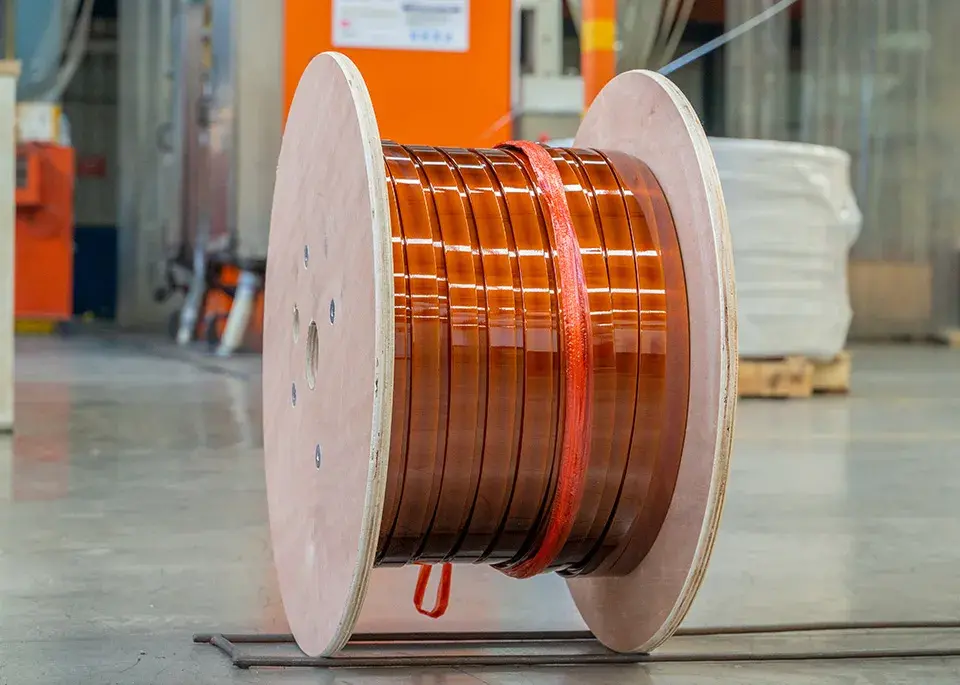
Winding wire is designed for coils, transformers, inductors and other electromagnetic components designed to insulate and conductive wire, the core function is to establish a stable magnetic field, the realization of the conversion and transmission of electric energy, is the basic core materials indispensable to the electronics industry, but also enameled wire winding of the basic raw materials.
Enameled wire belongs to the mainstream category of winding wire, also known as electromagnetic wire, high purity copper or aluminum as a conductor, coated with a dense and uniform insulating varnish film, both excellent electrical conductivity and reliable insulation protection, copper enameled wire winding, aluminum enameled wire winding of the main wire.
Compared with ordinary insulated wire, enameled wire has the unique advantages of thin film, high duty cycle, good temperature resistance, and suitable for tight winding, etc. It is the preferred wire for precision electromagnetic components, and is widely used in the winding of miniature coils and high-power motors.
Core advantages of enameled wire
Excellent conductivity
Most of the enameled wires use high purity oxygen-free copper as conductor, the conductivity can reach about 59.6MS/m, the loss in the process of power transmission is extremely low, which can effectively improve the operational efficiency of the equipment, and it is the ideal choice for high-frequency enameled wire winding.
Compared with aluminum core enameled wire, copper core enameled wire not only has higher conductivity efficiency, but also generates less heat and is more stable during operation, making it the standard choice for high-performance electrical and electronic equipment, and is suitable for all kinds of precision enameled wire winding needs.
Excellent thermal and chemical stability
The insulating varnish film of enameled wire has been treated with special technology, which can withstand the working temperature of 130℃-180℃ or even higher, and can be perfectly adapted to the use of high temperature working conditions of motors and transformers, and meet the technical requirements of high temperature enameled wire winding.
At the same time, the film has good solvent resistance, oil resistance, anti-aging characteristics, long-term use of the process is not easy to corrosion, embrittlement phenomenon, and effectively protect the long-term stability of the equipment operation, reduce the failure rate of enameled wire winding.
Complete size specifications
Enameled wire diameter covers a wide range, from micron-sized ultra-fine wire to coarse specification wire are available, AWG standard is complete, can meet the needs of different scenarios, suitable for different specifications of enameled wire winding industry.
Whether it is small components such as miniature coils and precision sensors, or large equipment such as high-power motors and high-voltage transformers, we can find suitable enameled wire specifications and models, covering the whole range of scenarios from fine enameled wire winding to coarse enameled wire winding.
Suitable for precision winding
Enameled wire has a uniform and thin film of insulating varnish, which can be tightly arranged during the winding process, effectively improving the slot filling rate of the coil and fully utilizing the limited space, which is the core advantage of precision coil winding.
Under the same volume, coils made of enameled wire can obtain stronger magnetic field and higher inductance value, which helps electronic equipment to develop in the direction of miniaturization and high efficiency, and is suitable for the industry trend of small enameled wire winding.
The importance of standardized winding process
Coil winding is not a simple “winding wire”, but a high-precision engineering work with strict requirements on precision, strength and environment, each link should not be ignored, which directly affects the enameled wire winding qualification rate.
Winding quality is good or bad, directly affecting the electrical performance of electromagnetic components, mechanical strength and operational reliability, and even determine the service life of the entire equipment, is the core of the enameled wire winding process assessment indicators.
If the winding process is not standardized, it will lead to a series of serious problems: lacquer film damage leads to turn-to-turn short-circuit, which in turn causes the whole machine to burn; loose coil triggered by the uneven magnetic field, the noise increases, efficiency decreases and so on, to increase the cost of enameled wire winding.
In addition, the number of turns error will cause resistance, inductance deviation from the design value, poor heat dissipation will accelerate the aging of the insulation, all of which will significantly shorten the product life, damage to the market reputation of enterprises, highlighting the importance of standardizing the operation of enameled wire winding.
Enameled wire winding core considerations
Wire and insulation matching selection
According to the working temperature of the equipment before winding, select the corresponding temperature-resistant enameled wire, the common class B 130 ℃, class F 155 ℃, class H 180 ℃, to avoid mismatch of temperature-resistant enamel film aging, to protect the quality of enameled wire winding.
According to the size of the working current of the equipment to determine the wire diameter specifications, fine wire suitable for high-frequency small-current scenarios, thick wire is more suitable for carrying large currents, to ensure that the conductive properties of the standard, to match the needs of different conditions of the enameled wire winding.
Corona-resistant enameled wire is required for high-voltage operation, and the high-frequency circuit gives priority to the Leeds wire structure, which effectively reduces the energy loss caused by the skin effect, improves the operation efficiency, and optimizes the effect of high-frequency enameled wire winding.
Winding Method and Geometry
For motors, precision inductors and other components with high performance requirements, it is recommended to use orthogonal dense winding method, which has high slot fullness, uniform magnetic field distribution and better heat dissipation, and is the preferred method for precision enameled wire winding.
Ordinary civilian coil can choose spiral winding, its operation is simple, more efficient, can effectively control the production cost, to meet the basic needs of use, suitable for conventional enameled wire winding scenarios.
During the winding process, the number of layers, turns and pitch should be strictly controlled, and each parameter should comply with the design standards to ensure that the electrical parameters of the coil meet the standards and standardize the enameled wire winding process.
Equipment precision and specialized configuration
If it involves ultra-fine enameled wire and micro-coil winding, it must use high-precision CNC winding machine. Ordinary equipments can not meet the requirements of micrometer-level precision and micro-tension control, which affects the quality of micro-enameled wire winding.
Ordinary winding machines are prone to wire breakage and varnish damage, affecting product quality, while specialized CNC equipment can accurately control every step of the winding process and improve the precision of enameled wire winding.
At the same time, it is necessary to calibrate the equipment’s guide wheel, tensioner, and wire arrangement mechanism regularly to ensure that the equipment’s operating precision is stable, to avoid batch defects caused by equipment errors, and to reduce the loss of enameled wire winding.
Tension control
Tension control is the most critical part of the enameled wire winding process, too much or too little tension will affect product quality, is the core control point of the enameled wire winding process. Too much tension will stretch the wire, break the enameled wire, and even cause the enamel film to crack and fall off, resulting in the loss of insulating ability.
If the tension is too small, it will lead to loose coils, chaotic wiring, inter-layer cross, which not only affects the appearance of the coil, but also triggers turn-to-turn short-circuit and parameter drift, leaving a safety hazard and reducing the qualification rate of the enameled wire winding.
In practice, the tension should be dynamically adjusted according to the wire diameter and material of the enameled wire, and kept constant throughout the process. Automatic winding machines need to be equipped with a closed-loop tension control system to compensate for tension fluctuations in real time, ensure the consistency of winding and optimize the effect of enameled wire winding.
Winding speed and precision control
Winding speed should be reasonably adjusted according to the wire specifications and product requirements. When winding high-power transformers and coarse wires, it is recommended to use low-speed winding to ensure that the wires are neatly arranged, to avoid problems such as broken wires and scratches on the lacquer film, and to ensure the quality of coarse enameled wire winding.
Small ordinary coils can appropriately increase the winding speed to improve production efficiency under the premise of ensuring quality, reducing production costs and optimizing the efficiency of enameled wire winding.
At the same time, it is necessary to accurately control the number of turns, wire spacing and interlayer position, the smaller the error, the more stable the electrical performance of the coil. Especially for medical, aerospace and other high-precision equipment coils, the requirements for precision are extremely stringent, and the whole process needs to be closed-loop monitored to meet the needs of high-precision enameled wire winding.
Environmental temperature and humidity control
The temperature and humidity of the winding environment have a great impact on the quality of enameled wire. A high temperature environment will soften the paint film, which is prone to be scratched and peeled off during the winding process, affecting the insulation performance and increasing the risk of enameled wire winding failure.
High humidity environment will lead to conductor oxidation, reduce the conductivity, but also affect the adhesion of the paint film, increase the risk of short-circuit, damage the reliability of the product, is not conducive to the stability of the enameled wire winding.
It is recommended to control the production environment at a temperature of 20-25 ℃, humidity 40% -60%, and equipped with temperature and humidity monitoring devices, abnormal ventilation, dehumidification or cooling in a timely manner, to ensure the stability of the wire state, to provide a good environment for the enameled wire winding.
Wire guidance and arrangement
During the enameled wire winding process, the wire should be transported through smooth guide wheels and guides, avoiding contact with sharp corners, burrs and other sharp parts, preventing scratching of the paint film, causing insulation damage, and reducing defects in enameled wire winding.
At the same time, it is necessary to ensure that each layer of wire evenly arranged, no cross, no stacking, no gap is too large, etc., to ensure that the coil structure is regular, to enhance the appearance and performance of enameled wire winding.
Neat coil not only has a beautiful appearance, but also can make the magnetic field distribution uniform, good heat dissipation, further improve the electrical performance and operational stability of the coil, and optimize the quality of enameled wire winding products.
Interlayer insulation and post-treatment
For high-voltage, high-power coils, the winding process must do a good job of interlayer insulation, insulating paper, insulating film and other materials can be used to separate the wire layer, to prevent interlayer short-circuiting, to ensure the safety of high-voltage enameled wire winding.
After the completion of the winding, the coil needs to be fixed at the end, dipping paint, drying and other post-processing procedures to enhance the mechanical strength of the coil and insulation properties, improve the overall stability and perfect the enameled wire winding process.
Varnish impregnation can also effectively improve the coil’s moisture-proof, dust-proof, and temperature-resistant ability, delay the aging of insulation, significantly extend the service life of the coil, and reduce the maintenance cost of the enameled wire after winding.
Quality inspection during the whole winding process
Pre-winding Inspection
Before winding, we need to carry out a comprehensive inspection of enameled wire, first of all, check the appearance to ensure that the wire is free of scratches, pinholes, color difference and oxidation, and the surface of the enamel film is smooth and even, so as to control the quality of the enameled wire winding from the source.
We use professional instruments to measure the wire diameter and roundness to ensure that the tolerance is within the industry standard and design requirements, to avoid the influence of coil parameters due to wire diameter deviation and to guarantee the precision of enameled wire winding.
At the same time, we verify the continuity of the enamel film, pass the test of pressure resistance and scratch resistance to eliminate the hidden danger of insulation; check the type of wire, temperature resistance level and certification to ensure that it meets the design requirements, and standardize the preparation of enameled wire before winding.
Inspection during winding
During the winding process, real-time inspection is required to closely monitor the key parameters such as tension, speed, number of turns, etc. Once abnormalities occur, immediately stop the machine for adjustment to avoid batch defects and control the quality of enameled wire winding process.
Through visual inspection of the line is neat, there is no cross, stacking, offset, etc., timely correction of irregularities in the winding behavior, optimize the enameled wire winding operation.
At the same time, the company observes whether the wire is scratched, pulled thin, paint film off, etc., and regularly randomly inspects the coil size and resistance value to ensure the winding process is stable and controllable, and to reduce the defective rate of enameled wire winding.
Finished product test after winding
After the winding is completed, we first carry out appearance inspection to ensure that the coils are not damaged, not deformed, and the ends are firmly fixed, which is in line with the appearance standard of the product and guarantees the appearance quality of the finished enameled wire winding products.
Subsequently, electrical performance tests are carried out, including conductivity test, DC resistance test, turn-to-turn voltage test, insulation resistance test, to ensure that all parameters meet the standards and verify the electrical performance of enameled wire winding.
According to the use of the product, also need to carry out high temperature, life and other reliability tests, in strict accordance with industry standards, qualified products need to issue a quality inspection report before storage or enter the next stage of assembly, improve the enameled wire winding quality inspection process.
Best practices to improve the quality of enameled wire winding
Establish a standardized workflow, clear wire selection, winding parameters, operating steps and inspection requirements, unified operating specifications, to avoid human error, standardize the enameled wire winding process.
Strengthen the professional training of employees, focusing on the training of tension adjustment, fault judgment, quality determination and other practical skills, to enhance the professionalism and sense of responsibility of employees, and to ensure the professionalism of the enameled wire winding operation.
Regular maintenance and precision calibration of winding equipment, timely replacement of worn parts, to avoid batch failure due to the decline in equipment precision, to ensure production efficiency and enhance the stability of enameled wire winding equipment.
Adopting lean production ideas, comprehensively combing the winding process, identifying and eliminating bottlenecks in loading, mold changing, testing and other links, to achieve double improvement in efficiency and quality, and optimize the production efficiency of enameled wire winding.
Priority is given to the use of high-quality enameled wire and auxiliary materials to reduce the risk of insulation damage, poor conductivity and other quality risks, improve the overall reliability and service life of the product, and reduce the cost of enameled wire winding.
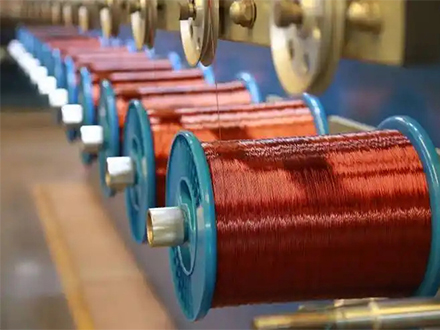
Enameled wire winding is the core process of electromagnetic components manufacturing, every detail of the control is related to product quality and operational safety, is the core competitiveness of the enameled wire winding industry. From wire selection, tension control, environmental management to the whole process of quality control, each link can not be slack.
Strictly observe the winding precautions, standardize the operation process, strengthen quality control, in order to produce efficient, stable and long-life coil products, and enhance the competitiveness of enameled wire winding products.
Whether it is a motor, transformer, inductor or precision solenoid valve, standardized enameled wire winding process is an important foundation to ensure the reliable operation of the equipment, enhance the core competitiveness of enterprises, and contribute to the high-quality development of the enameled wire winding industry.