What is the difference between bare wire and enameled wire?
In electrical engineering, industrial production, electronic equipment manufacturing and other fields, wire as the core carrier of current transmission, its selection directly determines the safety of the entire electrical system, operational efficiency, service life and comprehensive cost. Bare wire and enameled wire as the two most basic and widely used types of conductors, although both can realize the core function of current conduction, but in the structural design, performance characteristics, applicable scenarios there are essential differences.
What is bare wire
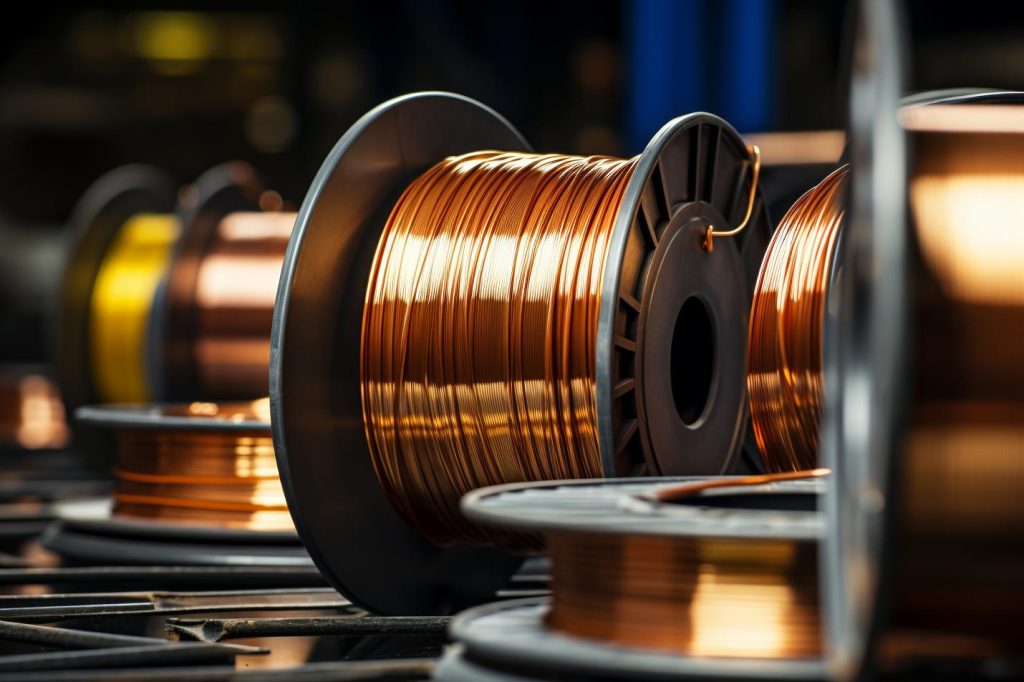
Bare wire is without any insulation layer, conductor directly exposed metal wire, the core design logic for “maximize the conductive efficiency”, simple structure, convenient process, is the basic wire of industrial electrical wiring.
Bare wire only consists of metal conductors, conductivity is not subject to external interference, the material is mainly selected copper and aluminum, special scenarios will be used in copper alloys, aluminum alloys, etc., the scope of application is narrower.
Common materials of bare wire
Copper bare wire: excellent conductivity, second only to silver, mechanical strength, ductility, the most widely used, suitable for high-voltage grounding, precision equipment connection and other scenarios, a variety of specifications; the disadvantage is that the cost is higher, long-term exposure to oxidation, affecting the surface luster and corrosion resistance.
Aluminum bare wire: conductivity of about 60% of copper, but light weight, low cost, suitable for long-distance high-voltage power transmission, large-scale plant external wiring and other scenarios; drawbacks are poor corrosion resistance, ductility is not as good as copper, not suitable for frequent bending.
Special bare wire, including copper and aluminum composite bare wire (both copper conductive advantages and aluminum lightweight low cost), galvanized bare wire (enhanced corrosion resistance, suitable for outdoor wet environment), the two process complexity, high cost, limited application.
What is enameled wire
Enameled wire, also known as electromagnetic wire, is used for winding manufacturing of insulated wire, its structure is more complex than bare wire, thin insulation layer (a few microns to tens of microns) can prevent short-circuiting, resistance to environmental erosion; conductor material to copper, aluminum-based, copper enameled wire conductive excellent, wide range of applications, aluminum enameled wire, low-cost, lightweight, adaptable to small electric motors, household electronic equipment and other scenes.
Insulation paint is the core of the enameled wire, the quality of its insulation, high temperature, corrosion resistance and life, the core advantage of “insulation + conductive” dual characteristics, to solve the bare wire dense wiring, complex environment, the use of pain points, the thin insulation layer does not increase the volume of the weight, to adapt to the compact installation, but also enhance the durability of the wire to extend the life of the equipment.
The core difference between bare wire and enameled wire
The essential difference between bare wire and enameled wire lies in whether or not they have an insulating layer, and this core difference is like the difference between “no protective coat” and “professional protective coat”, which directly determines their performance characteristics, application scenarios, usage risks and cost budgets.
Difference in insulation performance
Insulation performance is the core difference between the two, directly related to the safety and stability of equipment. Bare wire without any insulation protection, the highest conductive efficiency, but the security risks, easy to external debris triggered by short circuits, electrocution, only applies without insulation, no contact with conductive body and the human body of the scene, the complex environment needs additional insulation protection.
Enameled wire surface with a thin layer of insulating varnish, insulation, reliable, can isolate the conductor, resist environmental interference, suitable for dense wiring and compact installation scenarios, can avoid short-circuit leakage; drawback is that the varnish layer is susceptible to mechanical damage, the manufacturing process is complex, the cost is higher than the bare wire, the use of varnish layer need to protect the integrity of the use. The advantage of its thin insulation layer is suitable for motors, transformers and small electronic equipment for tight winding needs.
Differences in electrical conductivity
The conductivity of bare wire and enameled wire is mainly determined by the conductor material and cross-sectional area. Since the bare wire is not insulated, there is no additional obstruction in the current transmission process, and its conductivity is slightly higher than that of the enameled wire, but the performance difference between the two is very small and negligible in most engineering applications. Bare wire conductivity by the use of environmental impact is significant, if the conductor surface oxidation reaction or attached impurities, will lead to a significant decline in conductive efficiency, so it needs to be regularly cleaned and maintained; enameled wire surface insulation paint layer on the current obstruction is weak, its conductivity has a good stability and reliability, can fully meet the majority of electrical equipment on the “conductive – insulation “dual function of the use of most electrical equipment to meet the needs of the production process need to strictly control the thickness of the paint layer and curing quality to ensure that the conductive properties are not adversely affected.
Cost difference
Bare wire production costs are the lowest, its production process only contains drawing, annealing two core processes, without the need to add additional insulating materials, and transportation and storage process is more convenient. The cost of bare wire is mainly affected by fluctuations in the price of metal raw materials, and is suitable for large-scale wiring, temporary power supply and other cost-sensitive engineering scenarios.
The production cost of enameled wire is relatively high, its production needs to go through the four core processes of drawing, annealing, painting, curing, and need to consume a certain amount of insulating paint materials, the production cost of high-end enameled wire is higher. At the same time, the transportation and storage of enameled wire need to take special protective measures to prevent paint layer damage, its cost by the metal raw materials and insulating varnish price double impact. From a long-term application perspective, enameled wire can effectively reduce the cost of equipment maintenance and wire replacement, and has a significant cost-effective advantage in scenarios where insulation protection is required.
Other key differences
In addition to the above core differences, bare wire and enameled wire in terms of corrosion resistance, flexibility and service life there are also significant differences, specifically analyzed as follows:
Difference in corrosion resistance
Bare wire corrosion resistance is poor, due to its conductor is directly exposed to the external environment, easy to oxidation corrosion phenomenon; although the surface can be galvanized, tinned and other treatments to improve its corrosion resistance, but the enhancement effect is limited. The insulating varnish layer of enameled wire can form a complete protective barrier, which can effectively isolate the external environment from erosion, and has excellent corrosion resistance. There are differences in the corrosion resistance of different types of insulating varnish, and the integrity of the varnish layer needs to be ensured in the process of use to avoid the decline of corrosion resistance due to the breakage of the varnish layer.
Differences in flexibility
Bare wire due to no lacquer binding, with excellent flexibility, of which the copper bare wire flexibility is optimal, suitable for frequent bending, complex wiring application scenarios. Enameled wire due to the presence of paint layer on the surface, its flexibility is slightly lower than bare wire, if the bending angle is too large, too high, easy to cause the paint layer cracking off. There are differences in the flexibility of different types of enameled wire, the installation process needs to reasonably control the bending strength and angle to prevent damage to the paint layer.
Difference in service life
The service life of bare wire is shorter, usually 5-10 years, its service life is affected by the use of the environment, in the humid, corrosive environment, its service life will be further shortened. The service life of enameled wire is longer, usually up to 10-20 years, the service life of high-end enameled wire can even exceed 20 years; the insulating varnish layer can effectively protect the conductor, reduce oxidative corrosion and physical damage, significantly extend its service life, more suitable for long-term operation and maintenance of difficult application scenarios.
Application Scenarios
Based on the bare wire and enameled wire performance differences, the two application scenarios have a clear boundary, there is no absolute “advantage and disadvantage”, only “fit or not”. Clearly define the typical application scenarios of the two, to avoid selection errors, to ensure the safe and efficient operation of the equipment.
Bare wire application scenarios
Bare wire core advantages of high conductive efficiency, low cost, good flexibility, the disadvantage of no insulation protection, poor corrosion resistance, mainly used in the absence of insulation, the priority of the pursuit of efficiency and cost control scenarios, common applications are as follows:
Grounding system: the most core applications, all types of electrical equipment, construction, power engineering are required to use bare wire as a grounding line, can be fault current, static electricity quickly into the earth, to ensure safety, adaptive grounding requirements.
Power transmission: widely used in long-distance high-voltage overhead transmission lines, suitable for low-loss, low-cost demand, outdoor wiring distance without insulation, aluminum, copper and aluminum composite bare wire is the most widely used.
Welding and heavy electrical applications: Suitable for welding operations with high current transmission needs, can also be used for mining machinery, metallurgical equipment and other heavy equipment, simple electrical connections, reduce costs.
Simple electrical connections and temporary wiring: suitable for simple connections in dry and clean environments, as well as temporary power supply scenarios such as construction and outdoor activities, with easy installation and removal and low cost.
Special scenario applications: can be used for temporary wiring for electronic experiments, high temperature resistant wiring for high temperature scenarios, and can also be used to make metal mesh, shielded mesh and so on.
Bare wire application precautions: avoid contact with conductive materials, the human body and flammable and explosive substances; complex environment needs to be added to the external insulation protection; regular inspection and cleaning to ensure stable conductivity.
The application of enameled wire
Enameled wire core advantages for insulation and reliable, excellent conductivity, good corrosion resistance, long life, the disadvantage is the high cost, slightly less flexible, mainly used in the need for insulation, compact installation or harsh environments, common applications are as follows:
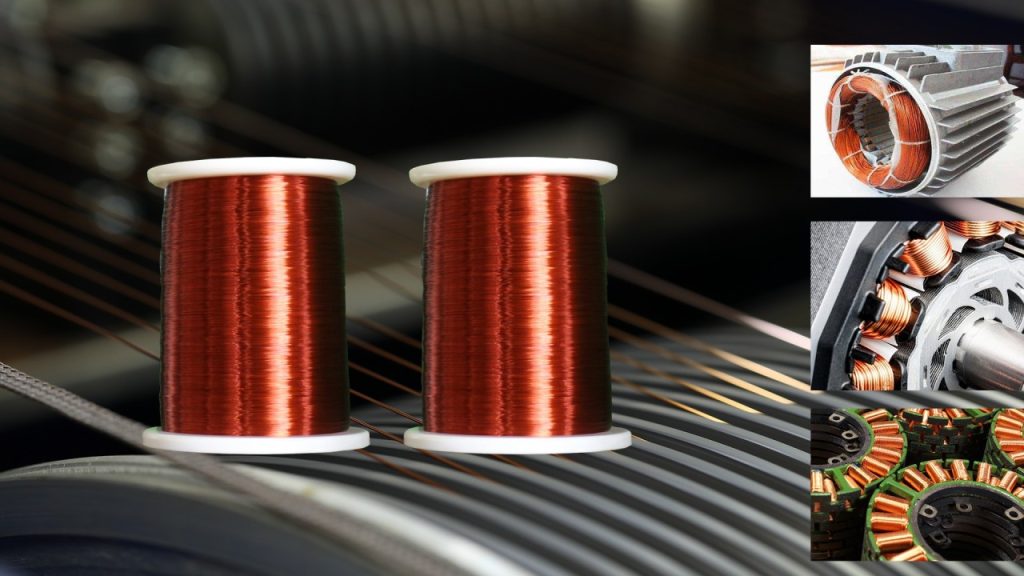
Motor and transformer: the most core applications, all motor and transformer windings are enameled wire, can be tightly wound to avoid short circuit, suitable for household, industrial, electric power and small equipment and other different scenarios.
Inductors and solenoids: used for inductors, solenoid valves, electromagnetic relays and other components, winding to form a stable magnetic field, to meet the insulation and compact installation requirements.
Small electronic devices: suitable for small devices such as cell phones, computers, headphones and other compact wiring needs, thin insulation, does not take up space, to ensure the safety and stability of the equipment.
High-temperature and harsh environments: Special enameled wires (e.g. polyimide enameled wires) can be adapted to aerospace, automotive, and industrial high-temperature and coastal corrosive environments to meet high-end performance needs.
Artistic use: With its diverse colors and tough texture, the wire can be used to make decorative sculptures, jewelry and other handicrafts, which is both aesthetically pleasing and practical.
Other special applications: can be used in medical equipment, new energy vehicles, solar power generation equipment, etc., to meet the needs of high-precision, high load, high temperature and so on.
Enameled wire application precautions: avoid paint layer scratch damage, damage to be repaired and replaced in a timely manner; according to the environment to choose the appropriate type; installation control bending strength; regular inspection and replacement of aging wire.
How to choose bare wire and enameled wire?
The core principle of selection is to “match the actual application needs”, when selecting bare wire and enameled wire, we need to consider the “insulation needs, conductive efficiency, environmental conditions, cost budget, installation scenarios, service life” six factors.
Priority for bare wire
Meet the following conditions can be prioritized bare wire, taking into account the needs and costs: no insulation protection (or can be provided through the external components insulation), the conductive efficiency requirements are very high, the wiring environment is simple and non-intrusive, budgetary constraints, the need for high flexibility to facilitate the wiring.
Selection reminders: the use of safety, avoid contact with conductive body, human body and flammable and explosive substances; slightly complex environment can be done on the bare wire surface treatment to enhance corrosion resistance.
Priority selection of enameled wire
To meet the following conditions can be prioritized enameled wire to protect the safety and stability of the equipment: the need to insulate against short circuits, compact wiring space needs to be tightly wound, the wiring environment is harsh, the security and stability of the equipment requires a high degree of stability, need to run for long periods of time and the difficulty of maintenance.
Selection reminder: according to the environment and the need to choose the appropriate insulating varnish and conductor materials, while paying attention to the specifications of the enameled wire to ensure that meet the conductive demand.
Selection of common misconceptions and avoidance methods
Summarize 4 types of common misconceptions and avoidance methods to avoid selection errors:
Misconception 1: blindly prioritize the selection of bare wire. Avoid: combined with the insulation needs to determine the need for insulation scenes can not be selected bare wire.
Misunderstanding two: avoid enameled wire due to high cost. Avoid: need to insulate the scene must choose enameled wire, its long-term cost-effective.
Misconception 3: Ignore the environment to choose the wire. Avoid: harsh environments corresponding to the selection of special enameled wire, dry environments combined with demand and budget selection.
Misunderstanding 4: Choose the wire specification arbitrarily. Avoidance: According to the actual current size, choose the appropriate diameter and cross-sectional area of the wire.
When the application scenario meets the following conditions, bare wire is a more appropriate choice to ensure that the use of demand at the same time, minimize costs and improve installation efficiency:
Selection reminder: even if the above conditions are met, the use of bare wire need to pay attention to safety, to ensure that the wire will not come into contact with other conductive materials, the human body or flammable and explosive substances, to avoid triggering safety hazards; if the environment exists in a slight moisture, dust, the bare wire can be surface treatment (eg, galvanized, tinned), to enhance corrosion resistance.
Summarize
Bare wire and enameled wire as the most basic and commonly used in the electrical system of the two types of conductors, the core difference is whether or not to have an insulating layer, this difference directly determines the performance characteristics of the two, the applicable scenarios, the cost of the budget and service life. Bare wire without insulation, the highest conductive efficiency, the lowest cost, the best flexibility, but safety and corrosion resistance is poor, suitable for no insulation protection, the priority of the pursuit of conductive efficiency and cost control scenarios, such as grounding systems, long-distance power transmission, temporary wiring, etc.; enameled wire with a thin layer of high-performance insulation, conductive efficiency close to bare wire, safety, corrosion resistance and service life is stronger, but the cost is higher, Flexibility is slightly worse, suitable for the need for insulation protection, compact installation or harsh environment scenarios, such as motors, transformers, small electronic equipment, high temperature industrial equipment.
In the actual selection process, no need to blindly pursue “high performance” or “low-cost”, the core is to match their own application needs, taking into account the insulation requirements, conductive efficiency, environmental conditions, cost budget, installation scenarios and service life of the six factors, to make accurate judgment.
At the same time, we need to pay attention to the precautions in the use of the process, regularly check the status of the wire, timely maintenance and replacement, to ensure the safe, efficient and stable operation of the equipment.