In the core components of electromagnetic equipment such as motors, transformers, inductors, etc., the performance of enameled copper wire directly determines the efficiency, reliability and service life of the whole machine. Among the many performance indicators of enameled wire, the adhesion strength between the enamel film and the copper conductor is often overlooked but is a crucial core characteristic. It not only affects the smoothness of the production process, but also directly relates to the stability and safety of the equipment in long-term operation. In this paper, we will analyze the importance of film adhesion, factors affecting the practical application of value, to help industry practitioners to make more scientific selection decisions.
The paint film adhesion
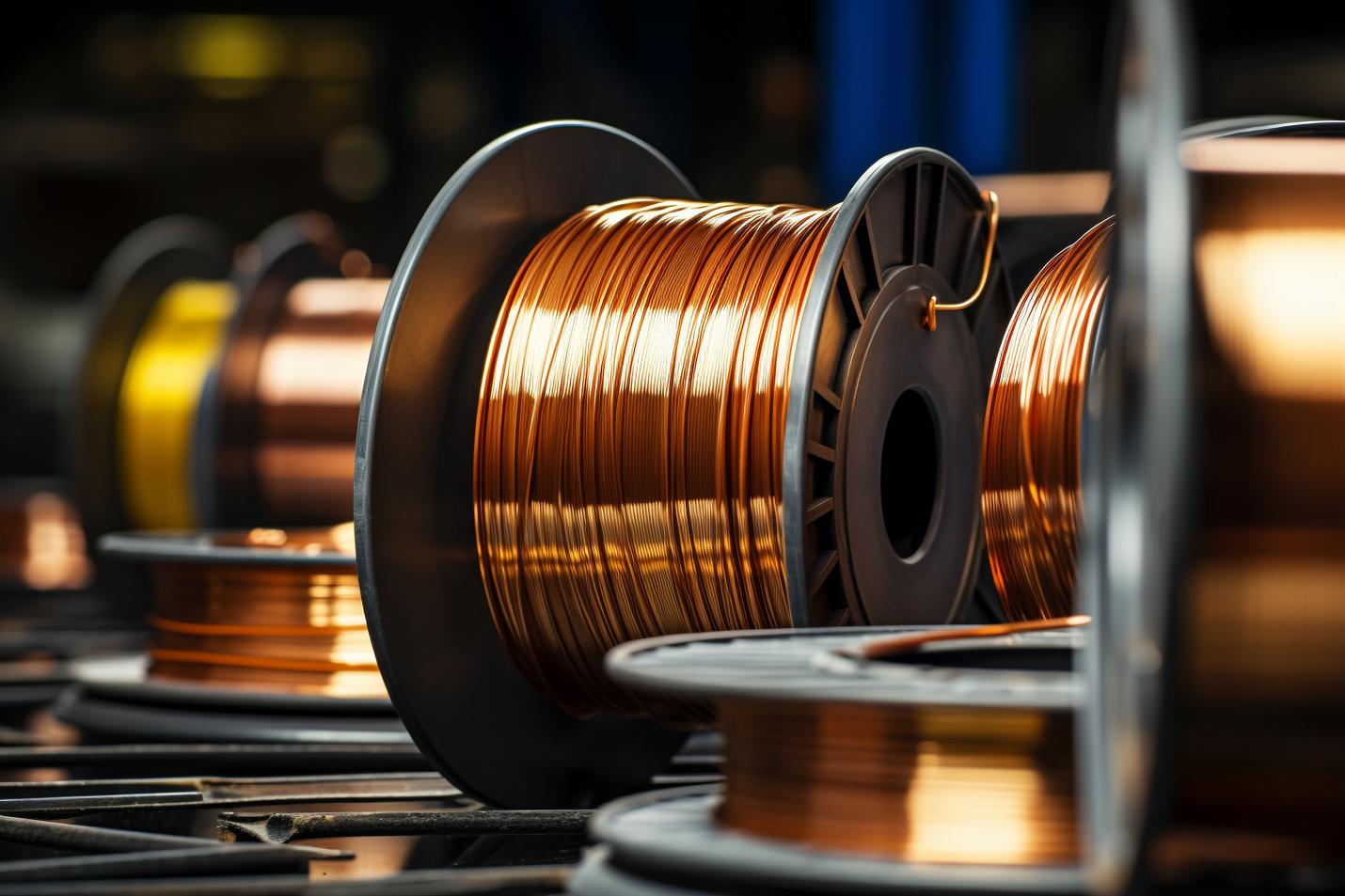
Enamel adhesion refers to the insulating varnish film and copper conductor surface bonding strength, which is a measure of the quality of enameled wire, one of the core indicators. High quality enameled wire enamel film should be tightly adhered to the copper core to form a solid whole, even through the complex processing and harsh operating environment, but also to maintain integrity without stripping.
In essence, the adhesion of the enamel film is the basis for the insulating function of enameled wire. The insulating varnish of enameled wire carries out three core missions: preventing short-circuiting of adjacent turns, realizing high-density winding design, and resisting environmental erosion. The realization of all these functions must be built on the basis of a strong bond between the enamel film and the copper core. If the adhesion is insufficient, the paint film is prone to peeling, cracking and other problems, which directly leads to insulation failure and equipment failure.
In practical application, the importance of paint film adhesion is reflected in two key scenarios:
1, the mechanical stress of the process: automated winding process, the enameled wire needs to withstand bending, stretching, friction and other multiple mechanical effects. Strong adhesion of the enamel film can resist these stresses, to avoid the phenomenon of “paint removal”, to ensure that the winding process is carried out smoothly; and poor adhesion of the product may be in the winding stage of the film damage, to the subsequent production of buried hidden trouble.
2, the operation process of the environmental test: motor, transformer and other equipment operation will produce continuous thermal cycle, vibration, part of the scene will also face humidity, chemical media and other erosion. Strong adhesion to ensure that the paint film in the thermal expansion and contraction, repeated vibration is not separated from the copper core, to maintain the integrity of the insulation, to extend the service life of the equipment.
The potential risk of weak paint adhesion
Weak adhesion of enamel film is one of the most fatal defects of enameled wire, which triggers a chain reaction that may lead to equipment failure or even safety accidents, specific risks include:
1. Insulation failure and short circuit risk
This is the most direct hazard. When the enamel film is stripped from the copper conductor, the exposed copper cores of the neighboring wire turns will come into direct contact, triggering a short-circuit failure. In transformers, motors and other high-voltage, high-power equipment, short-circuiting may lead to instantaneous overloading and heating, and in severe cases, may even cause a fire. An industry report shows that 68% of high-voltage arc faults originate from insulation failure, and more than 30% of them are directly related to the lack of paint adhesion.
2. equipment efficiency drops dramatically
The voids formed by peeling paint film will increase the contact resistance of the windings, resulting in a significant increase in power loss (I²R loss). At the same time, peeling paint fragments may adhere to the winding gaps, affecting the efficiency of heat dissipation and causing the equipment to operate at higher temperatures, further exacerbating energy consumption. Data show that the use of unqualified adhesion of enameled wire, equipment efficiency may drop 5% -15%, long-term operation will cause a huge waste of energy.
3. Shorten the service life of equipment and maintenance cost surge
Insufficient adhesion of enameled wire in repeated thermal cycling and vibration, the paint film will continue to fall off, cracking, insulation performance gradually deteriorate, and ultimately lead to early equipment scrapping. For large-scale equipment such as wind power, rail transportation, and industrial motors, the maintenance costs of replacing windings are extremely high, and downtime for repairs can cause serious production losses. In addition, the paint film may also lead to oxidized corrosion of the copper core, further aggravating the damage to the equipment.
4. Failure to meet industry standards and compliance requirements
International mainstream standards such as IEC 60317, NEMA MW 1000, UL 1446, etc., have set clear requirements for the adhesion of enameled wires. If the product adhesion does not meet the standard, it will not be able to pass the compliance certification and lose the market access qualification. Especially in the aerospace, medical equipment, new energy vehicles and other high-end areas, the requirements for film adhesion is more stringent, unqualified products simply can not be put into use.
The core factors affecting the adhesion of paint film
The formation of paint film adhesion is the copper conductor, paint material, production process and other factors together, understand these influencing factors help to control product quality from the source:
1. Surface condition and cleanliness of copper conductor
Copper conductor surface flatness, cleanliness directly affects the adhesion effect of the paint film. Rough surface of the copper core can increase the contact area with the film, the formation of mechanical bite effect, adhesion is significantly better than the smooth surface; and the existence of oil, oxidation layer, dust and other impurities on the surface of the copper core, will impede the effective combination of paint and copper core, resulting in a significant decrease in adhesion. Therefore, high-quality enameled wire production process, the copper core will be strictly degreasing, descaling, cleaning treatment to ensure that the surface is clean and free of impurities.
2. Characteristics and formulation of enamel material
The chemical composition of the enamel material is the core factor that determines the adhesion. The compatibility of different insulating materials with the copper core varies significantly:
– Polyurethane: better compatibility with copper cores, excellent adhesion and solderability, suitable for automated winding scenarios;
– Polyimide (Polyimide): excellent resistance to high temperatures, but the adhesion to the copper core needs to be optimized through the formulation;
– Composite coatings (e.g. polyester-polyamide composite): combining the advantages of multiple materials to achieve a balance between adhesion, heat resistance and chemical stability.
In addition, some manufacturers will add adhesion promoter in the paint film formula to enhance the erosion of the paint film melt on the surface of the copper core, and thus enhance the bonding strength.
3. Production process parameters control
The coating and curing process in the production process has a great influence on the adhesion:
– Coating process: film thickness uniformity is critical, too thick or too thin will affect the adhesion, quality products can be controlled within ±4-±6μm film thickness tolerance;
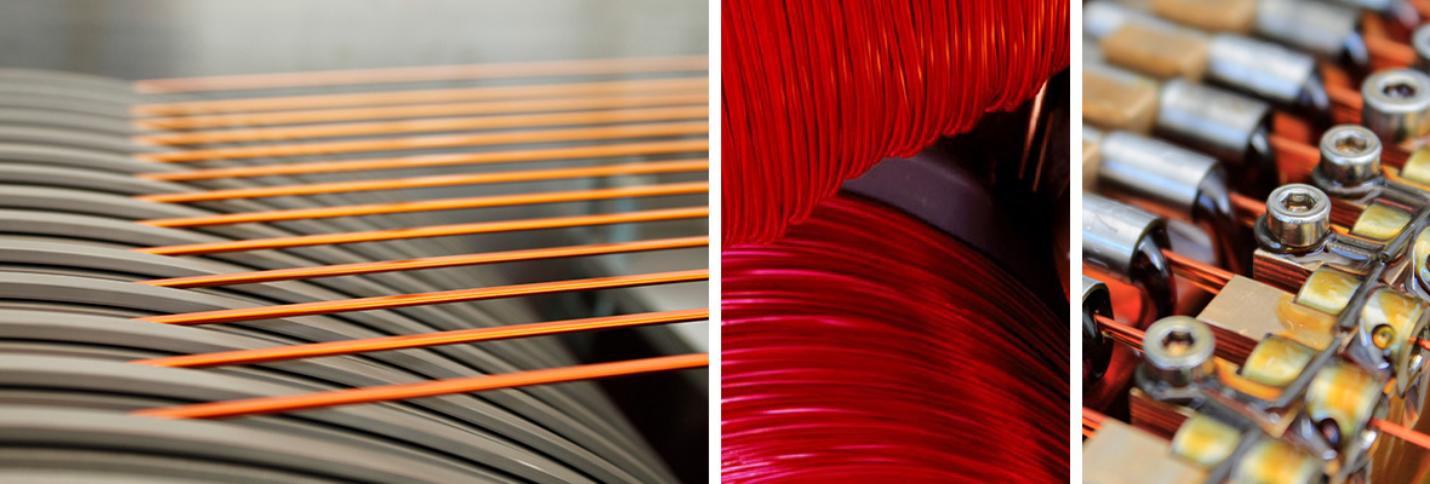
– Curing temperature and time: baking temperature is too high or not enough, curing time is too long or too short, will lead to the paint film and copper core combination is not sufficient, the adhesion decreased;
– Melt surface tension: the surface tension of the paint film melt needs to be moderate, too high will lead to poor wettability, can not evenly cover the surface of the copper core, affecting the formation of adhesion.
4. Post-processing and storage conditions
After the production of enameled wire cooling method, storage environment will also indirectly affect the adhesion. Too fast cooling speed may lead to mismatch between the thermal expansion coefficient of the enamel film and the copper core, resulting in internal stress; the storage environment is humid and high temperature may lead to oxidation of the copper core or moisture absorption of the enamel film, which will reduce the bonding strength.
Evaluation standard of paint film adhesion
In order to accurately determine the quality of paint film adhesion, the industry has developed a clear evaluation criteria, mainly based on the degree of exposure of the metal after the paint film stripped to classify the level, as follows:
Classification of adhesion grade
Varnish adhesion grade is the core quantitative standard for judging the quality of enameled wire in the industry, and its core judgment is based on the following: under the standard testing conditions, the degree of peeling and the specific state of metal conductor exposure after the varnish film is subjected to the specified mechanical stress or environmental stress. The grade directly reflects the tightness of the combination between the varnish film and the copper conductor, but also an important basis for subsequent selection, quality acceptance and compliance testing, of which Silk for the optimal grade, bald plate for the worst grade, the four grades of the specific definitions, characteristics and determination criteria are as follows:
– Silk (Silk): the best adhesion grade This grade is the ideal state of enamel film adhesion of enameled wire, representing the film and copper conductor bonding exceptionally tight. After the standard impact, peeling or flexibility test, the enamel film only appears a very small amount of scattered dots or lines of metal exposure, the exposure area is far less than 5% of the total test area, and there is no obvious film peeling, cracking phenomenon. This type of enameled wire can easily withstand the mechanical stresses of winding, bending and other processes, as well as thermal cycling, vibration and other working conditions in the operation of the equipment, suitable for aerospace, high-end medical equipment and other scenarios with high reliability requirements.
– Mesh: good adhesion level The level of performance for the paint film and copper conductor combination is relatively strong, after the test paint film stripping presents a uniform mesh distribution, the metal exposure area is a fine grid, no large areas of continuous piece off. The mesh exposure is due to the slight peeling of the paint film caused by local uneven force, but its overall bonding can still meet the needs of most industrial scenarios, such as ordinary industrial motors, small and medium-sized transformers, etc., which can effectively avoid the risk of insulation failure during processing and operation.
– Blocky: general adhesion level The adhesion of the paint film of this level has reached the critical standard, after the test, there will be a large area of blocky paint film peeling, only a small amount of primer remains at the test point, the metal exposure area is more than 30% of the total test area. This type of enameled wire is susceptible to further varnish peeling when subjected to large mechanical stresses (e.g. tight winding, severe vibration) or frequent thermal cycling. is only suitable for scenarios with low performance requirements and mild operating environments, e.g., small civilian electrical appliances, low-power inductors, etc., and the operating conditions need to be strictly controlled.
– Bald board: the worst adhesion grade This grade is a failure state, the enamel film and copper conductor combination is extremely loose, after the test, the enamel film is completely off, the surface of the copper conductor is bare and no residue, the metal exposure area reaches 100%. This kind of enameled wire in the production and processing stage may appear paint phenomenon, can not withstand any mechanical stress or environmental changes, the use of extremely easy to cause short circuits, equipment failure and other safety hazards, is strictly prohibited for any electrical equipment, is a substandard product, need to be scrapped immediately.
The core of the paint film adhesion testing methods
In addition to evaluating the grade, there are a variety of specialized testing methods in the industry to accurately assess the strength of paint film adhesion, which can be carried out regularly during the production process or before application to effectively avoid the risk of insulation failure, including:
1. Specialized testing methods
– Jerk Test: Paint film adhesion is determined by applying a sudden mechanical force. Under tension, a large external force is applied to the sample enameled wire to make it break, followed by a comprehensive inspection of the insulation damage and surface roughness at the break. If there is abnormal roughness or insulation damage at the fracture point, it means that the adhesion of the enamel film is poor and cannot resist sudden mechanical stress.
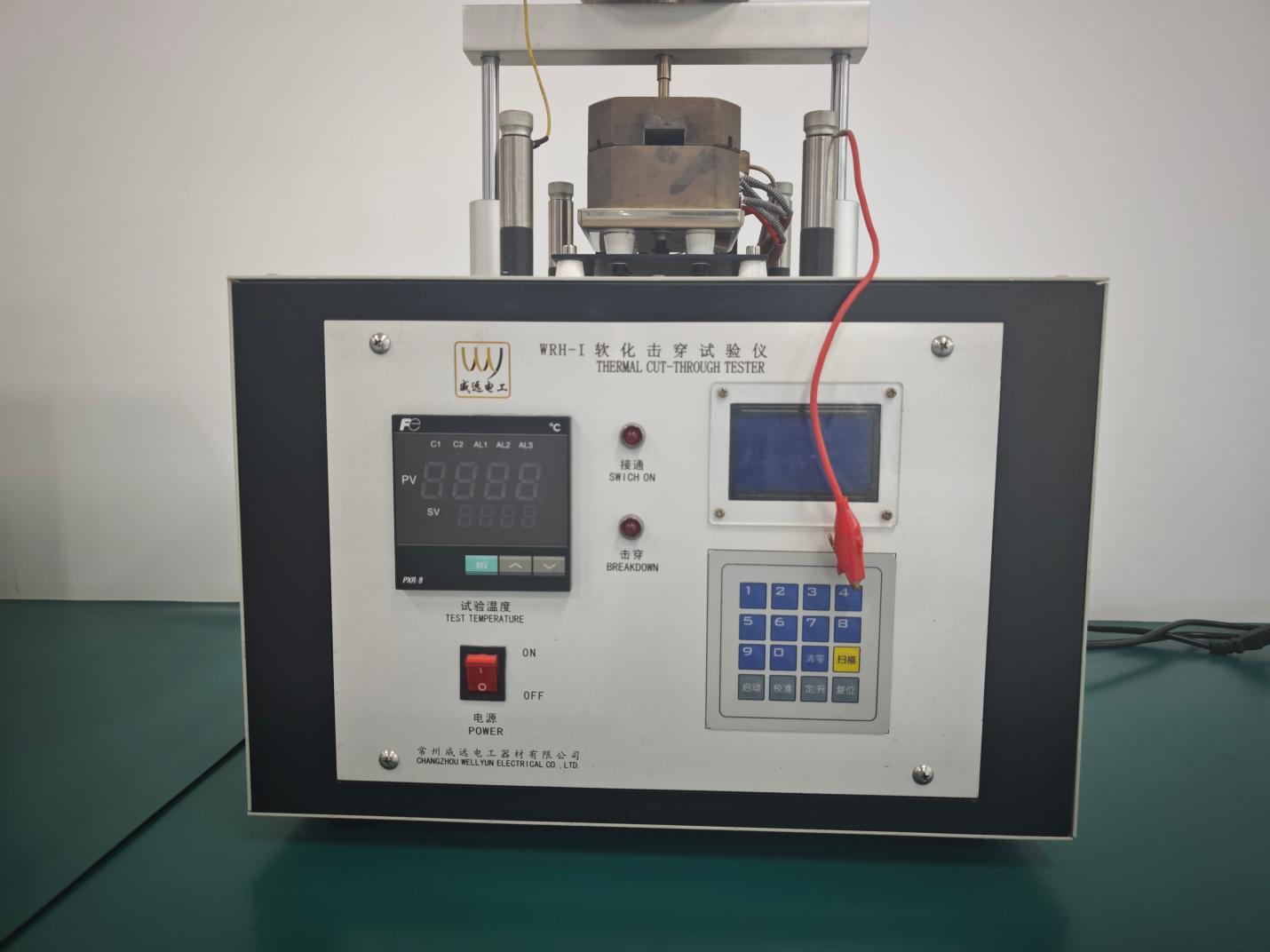
– Flexibility Test: The adhesion of the paint film is examined by tightly winding the sample enameled wire. During the test, the enameled wire undergoes frequent stretching and bending, exerting intense mechanical stress on the insulation layer. After the winding is completed, the tightly wound coils are thoroughly inspected with a magnifying glass to see if there is any deformation of the insulation layer. If the insulation layer is cracked or broken, it indicates that the enamel adhesion of the wire is not up to standard and cannot withstand the mechanical stresses of the winding process.
– Peel Test: First, use a sharp tool to make scratches on the sample enameled wire, and then place the enameled wire under tension and carry out violent mechanical twisting to observe the time required for the paint film to peel off. If the paint film is peeled off in a short time, it means that its adhesion is poor, and it is difficult to adapt to the vibration, thermal cycle and other working conditions in long-term operation.
2. Conventional auxiliary testing methods
Conventional bending test (Mandrel Wrap Test), thermal shock test (Heat Shock Test), scratch test (Scratch Test) still need to be used in conjunction with the further verification of the adhesion of the paint film: bending test by bending the enameled wire around the specified diameter of the mandrel, to observe whether the paint film is cracked, peeling off; thermal shock test will be placed on the enameled wire at a specified temperature (such as 220 ℃) under insulation for a certain period of time. Thermal shock test is performed by holding the enameled wire at a specified temperature (e.g. 220°C) for a certain period of time and then cooling it quickly to check whether the enamel film is separated from the copper core due to thermal expansion and contraction; scratch test is performed in accordance with the IEC 60851 standard, where the enamel film is scraped with a special tool to assess its scratch resistance and adhesion. The interfacial adhesion strength of high quality enameled wire can reach 8-12 N/mm².
Different application scenarios under the adhesion selection suggestions
Different industries on the enameled wire working environment, service life, reliability requirements vary greatly, need to target the selection of suitable adhesion level of the product:
1. Industrial motors and transformers
This kind of equipment generates a lot of heat during operation and is subject to constant vibration, so it is necessary to choose enameled wires with strong adhesion and high temperature resistance. Recommended polyester imide – polyamide imide composite coating (Class 180-220 ℃), which is not only excellent adhesion, but also can withstand high temperatures, oil and other harsh environments, to ensure that the equipment long-term stable operation.
- New energy vehicles and charging piles
New energy vehicle drive motors and charging pile transformers are exposed to frequent start-stop, severe vibration, large temperature fluctuations and other harsh conditions, which require high adhesion of paint film. It is recommended to choose products that meet Class 200+ insulation system standards to ensure that the paint film does not peel off and insulation failure occurs under complex working conditions.
3. Aerospace and medical equipment
Aerospace and medical imaging equipment, such as MRI, require the highest level of reliability and safety. High-end enameled wires with filament adhesion ratings and strict compliance certifications are required. Polyimide coatings or multi-layer composite coatings are recommended to ensure excellent adhesion under extreme temperatures, vacuum and other special environments.
4. Consumer electronics and small electrical appliances
Household appliances, small motors and other equipment is cost-sensitive, but still need to ensure the basic adhesion requirements. Polyurethane or polyester coated enameled wire (Class 130-155℃) can be chosen to meet the needs of automated winding and daily use while controlling production costs.
Conclusion
Enamel adhesion may seem to be a “detailed indicator” of the enameled wire, but it is the core factor that determines the performance, safety and life of electromagnetic equipment. In industrial automation, new energy, aerospace and other fields of rapid development today, the equipment on the increasingly stringent requirements of the enameled wire, the importance of varnish adhesion is more and more prominent.
For enterprises, the choice of adhesion of the enameled wire, not only can reduce the production process of the scrap rate, improve production efficiency, but also from the source to avoid the risk of equipment failure in operation, reduce maintenance costs, enhance product competitiveness. When selecting the type, the application scenario, environmental conditions, industry standards and other factors should be taken into account, the product adhesion level should be verified through the test report, and priority should be given to the suppliers with mature technology and stable quality – Regularly carrying out tests such as the impact test, flexibility test and stripping test is the key link to guarantee the quality of enameled wire.
In the future, with the continuous progress of material technology and production process, the enamel adhesion of enameled wire will be further improved, while achieving heat resistance, chemical resistance, lightweight and other multi-performance synergistic optimization, to provide more reliable support for the development of high-end electromagnetic equipment.